
Easy Cabbage Soup Recipe (Ready in 30 Minutes)
Cabbage Soup Recipe
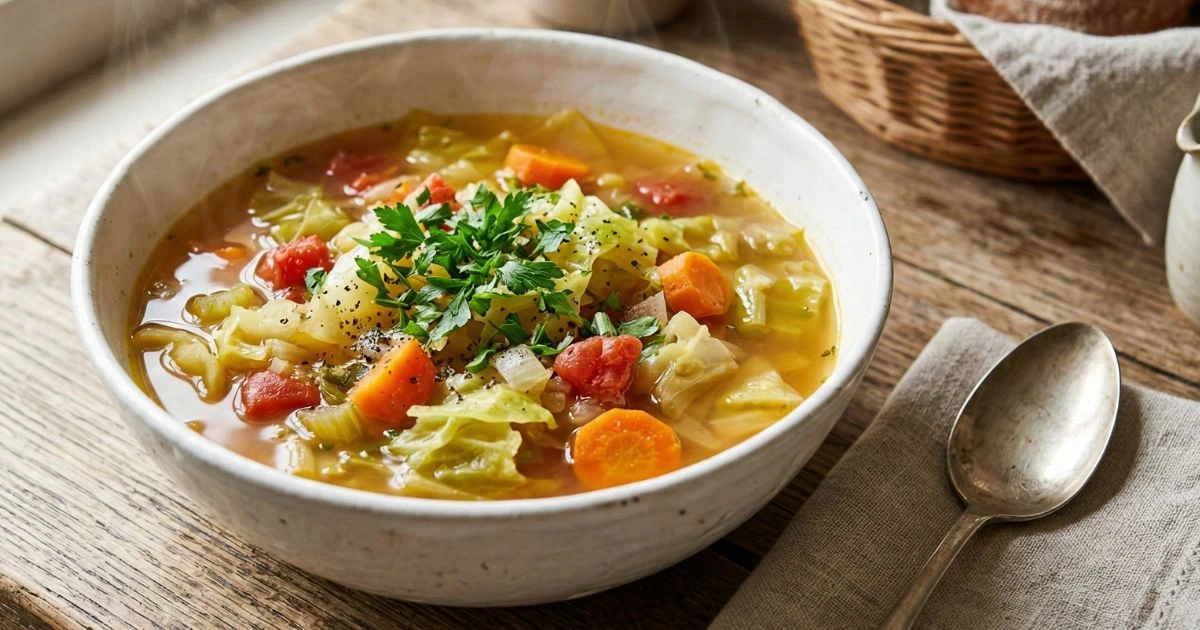
You’re about to discover a cabbage soup recipe that will change the way you think about healthy, budget-friendly cooking. This isn’t just another soup—it’s a complete meal that comes together in 30 minutes flat, costs less than $10 to make, and delivers eight generous servings of nutritious comfort food.
I’ve made this cabbage soup countless times, and I can tell you with complete confidence: it works. Every single time. The vegetables stay perfectly tender without turning mushy, the broth develops rich flavor without hours of simmering, and the result is a bowl of soup that’s satisfying enough to stand on its own as dinner.
Whether you’re meal prepping for a busy week, trying to eat healthier without sacrificing flavor, or simply looking for a way to use up that head of cabbage in your crisper drawer, this recipe delivers. You don’t need fancy ingredients, specialized equipment, or advanced cooking skills. Just follow these straightforward steps, and you’ll have a pot of delicious homemade soup that rivals anything you’d find in a restaurant.
Why This Cabbage Soup Recipe Works Every Time
You’ll Actually Finish in 30 Minutes
Unlike most “quick” recipes that conveniently forget to count prep time, this cabbage soup truly takes 30 minutes from the moment you pull out your cutting board to the moment you’re ladling it into bowls. The secret lies in cutting your vegetables to uniform sizes and using medium-high heat to develop flavor quickly without requiring hours of slow simmering.
You’re Getting Real Nutritional Value
Cabbage isn’t just cheap, it’s a nutritional powerhouse. According to the USDA FoodData Central, one cup of raw cabbage contains only 22 calories while providing 54% of your daily vitamin C requirement and an impressive 85% of your daily vitamin K. When you combine cabbage with other vegetables and optional protein additions like beans or lean meat, you’re creating a complete, balanced meal in a single bowl.
This soup gives you five grams of fiber per serving, which keeps you full longer and supports digestive health. You’re also getting significant amounts of vitamin A from the carrots, potassium from the tomatoes, and antioxidants from the garlic and herbs.
You’ll Save Serious Money
The entire pot of this cabbage soup costs less than $10 to make and yields six to eight servings. That breaks down to approximately $1.25 per bowl—far less than even the cheapest takeout option. A head of cabbage costs around $2, and you probably already have most of the other ingredients in your pantry. You’re looking at one of the most cost-effective meals you can possibly make.
What You’ll Need for This Cabbage Soup Recipe
Your Core Vegetables
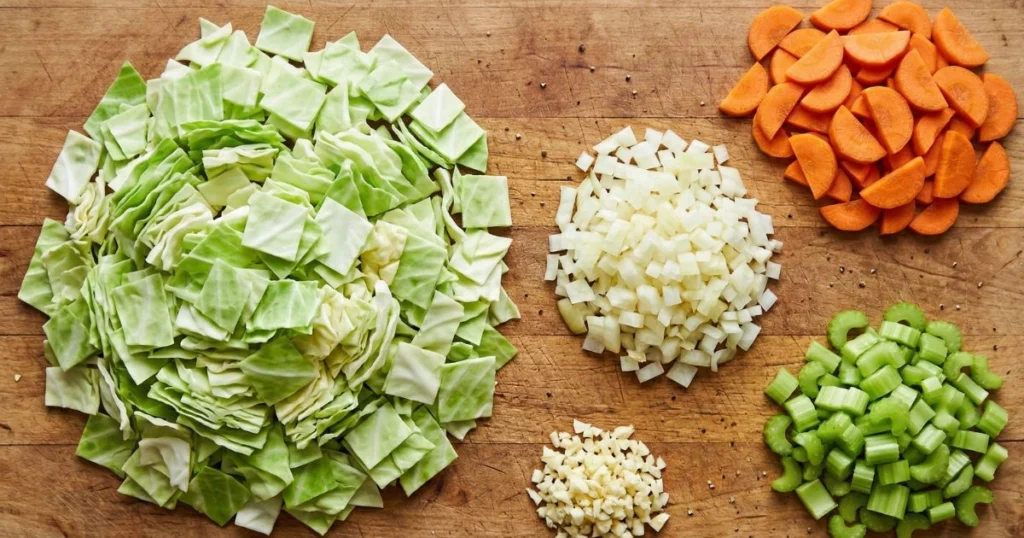
- 1 medium head green cabbage (about 2 pounds), chopped into 1-inch pieces
- 1 large yellow onion, diced
- 3 medium carrots, sliced into half-moons
- 3 celery stalks, chopped
- 4 cloves garlic, minced
Your Liquids and Seasonings
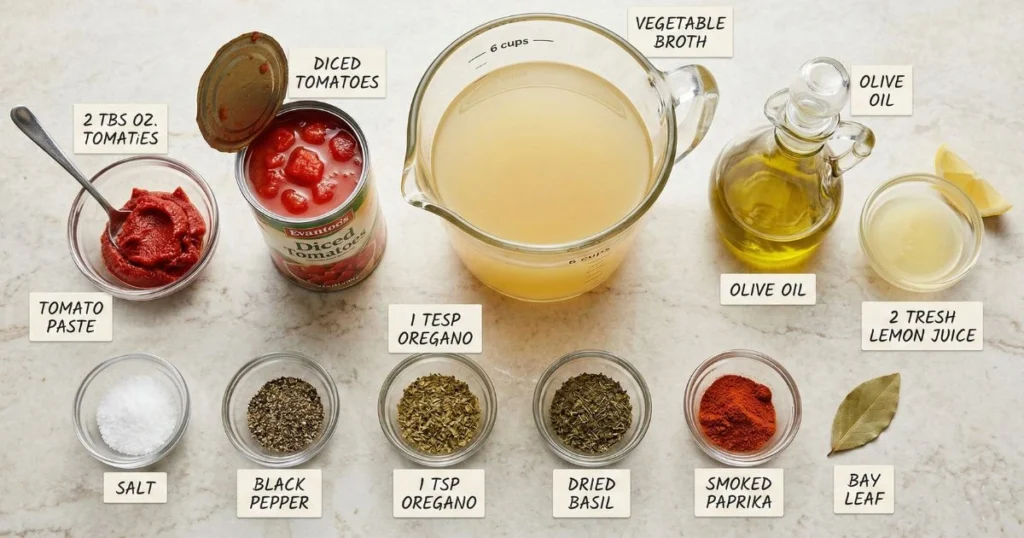
- 6 cups of low-sodium vegetable broth (you can substitute with chicken broth if preferred)
- One 14.5-ounce can of diced tomatoes, including the juices
- 2 tablespoons tomato paste
- 2 tablespoons olive oil
- 1 teaspoon dried oregano
- 1 teaspoon dried basil
- ½ teaspoon smoked paprika
- 1 bay leaf
- Salt and black pepper to taste
- 2 tablespoons fresh lemon juice
Optional Ingredients to Boost Protein and Flavor
- 1 can (15 ounces) white beans or chickpeas, drained and rinsed
- ½ pound ground beef or ground turkey, browned separately
- 1 cup chopped kale or fresh spinach
- Red pepper flakes for heat
- Fresh parsley for garnish
How to Prepare the Most Flavorful Cabbage Soup in Just 30 Minutes
Step 1: Prepare Your Vegetables (5 Minutes)
Start by chopping your cabbage into roughly one-inch pieces. Don’t worry about being precise, cabbage shrinks dramatically as it cooks, so larger pieces are better than smaller ones. You want them tender but not disintegrated.
Dice your onion, slice your carrots into half-moon shapes, and chop your celery into similar-sized pieces. Save the garlic for last and mince it right before you need it. Garlic loses its potency quickly once cut, so you’ll get the most flavor by preparing it at the last minute.
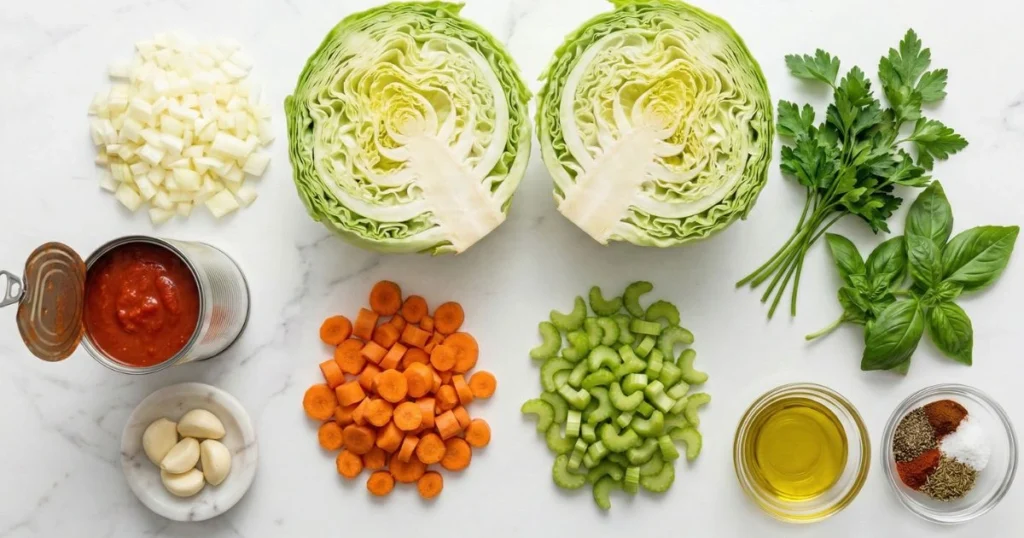
Why uniform cuts matter: When your vegetables are cut to similar sizes, they cook at the same rate. According to America’s Test Kitchen, this prevents you from ending up with some vegetables that are perfectly cooked while others are either raw or mushy. This simple technique is the difference between amateur and professional-quality soup.
Step 2: Build Your Flavor Foundation (5 Minutes)
Heat your olive oil in a large pot or Dutch oven over medium-high heat. You want the oil shimmering but not smoking. Add your diced onion, carrots, and celery, this classic combination is called mirepoix, and it’s the flavor base for countless soups and stews.
Sauté these vegetables for four to five minutes, stirring occasionally. You’re looking for the onions to become translucent and slightly softened. This isn’t about browning; it’s about releasing the natural sugars and developing a sweet, savory foundation.
Now add your minced garlic and tomato paste. Stir constantly for one full minute. This step is critical and non-negotiable.
Why you can’t skip this: When you cook tomato paste in oil, you’re caramelizing it. This process eliminates the raw, metallic taste that canned tomato paste has and creates a rich, deep flavor that permeates your entire soup. One minute of stirring makes the difference between flat-tasting and restaurant-quality soup.
Step 3: Add Your Cabbage and Liquids (2 Minutes)
Place all the freshly chopped cabbage into the pot. Yes, it will look like an enormous mountain that could never possibly fit. Don’t panic. Stir it around for about 30 seconds, and you’ll watch it begin to wilt and shrink before your eyes.
Pour in your vegetable broth and the entire can of diced tomatoes, including all the juice. Add your dried oregano, dried basil, smoked paprika, and bay leaf. Stir everything together until well combined.
Step 4: Simmer Until Perfectly Tender (15-18 Minutes)
Increase the heat to high and bring your soup to a rolling boil. Once it’s boiling, reduce the heat to medium and let it simmer uncovered for 15 to 18 minutes. Stir occasionally to prevent anything from sticking to the bottom of your pot.
You’ll know your cabbage soup is ready when the cabbage is tender but still has a slight bite to it. It should not be mushy or falling apart. Insert a fork into a piece of cabbage, it should slide in easily but the cabbage should still hold its shape.
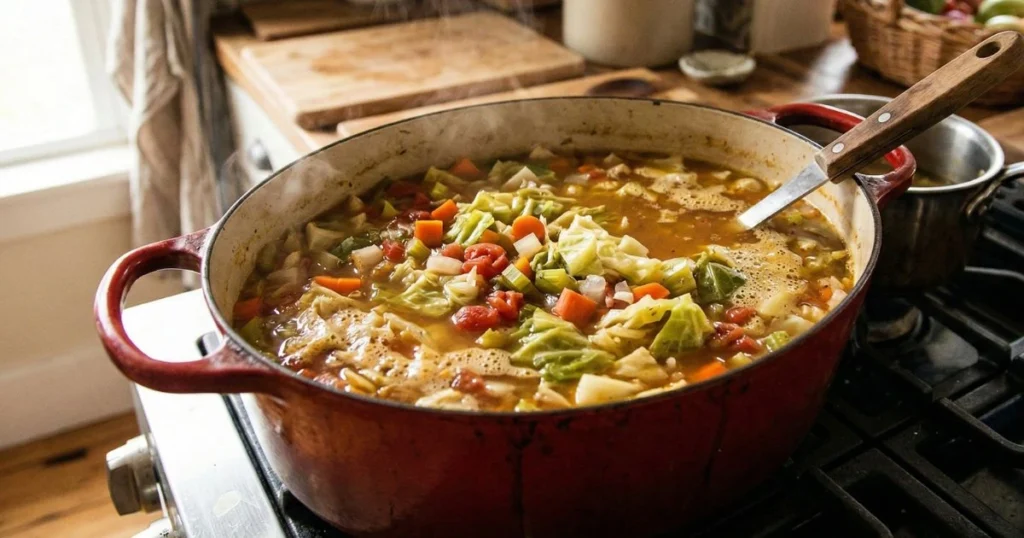
The science of perfect cabbage: Overcooking cabbage releases sulfur compounds that create an unpleasant smell and bitter taste. The Cleveland Clinic notes that lightly cooked cabbage retains significantly more nutrients than overcooked versions. You’re not just preserving flavor, you’re preserving the health benefits that make this soup so valuable.
Step 5: Final Touches and Seasoning (2 Minutes)
Remove and discard your bay leaf. Stir in your fresh lemon juice, this is the secret ingredient that makes good soup great. The acid brightens all the other flavors and adds a fresh, vibrant quality that makes your soup taste like it simmered for hours.
Taste your soup and adjust the salt and pepper. Start conservatively and add more if needed. Remember that if you’re adding cheese or serving with salty crackers, you want to under-season slightly.
If you’re adding leafy greens like kale or spinach, stir them in now and cook for two to three minutes until wilted. If you’re using canned beans, add them now as well and let them heat through.
Professional Tips for Restaurant-Quality Cabbage Soup
Choosing the Right Type of Cabbage
Green cabbage is your best all-around choice. It’s affordable, available everywhere, and has a mild, slightly sweet flavor that works in virtually any cabbage soup recipe. It holds its shape well during cooking and won’t fall apart.
Savoy cabbage has beautiful crinkled leaves and a more delicate texture. If you prefer softer, more tender soup, this is your cabbage. It’s slightly more expensive but worth it for special occasions.
Red cabbage works perfectly well, but be aware that it will turn your broth purple. It also has a slightly peppier, more assertive flavor. Use it if you want a visually striking soup or enjoy a bit more bite.
How to Make Your Soup Taste Even Better
Add a parmesan rind to your soup while it simmers. This adds incredible umami depth and richness without changing the soup’s character. Just remember to fish it out before serving.
Use bone broth instead of regular broth if you want to take this soup to the next level. According to Harvard Health, bone broth contains collagen, gelatin, and minerals that regular broth lacks, giving your soup a richer mouthfeel and additional health benefits.
Deglaze with wine after sautéing your vegetables. Add one-quarter cup of dry white wine and scrape up all the browned bits from the bottom of your pot. Let it reduce for one minute, then proceed with the recipe. This adds complexity and depth that’s hard to achieve otherwise.
Adjusting Texture to Your Preference
For a thicker, heartier soup, use a potato masher to mash some of the vegetables against the side of your pot. This releases starches and creates a creamier consistency without adding dairy. Alternatively, blend one to two cups of the soup and stir it back in.
For a lighter, brothier soup, simply add an extra cup of broth. You can also reduce the amount of vegetables slightly if you prefer more liquid to solids.
Proper Storage for Maximum Freshness
Store your cabbage soup in an airtight container in the refrigerator for up to five days. The flavors actually improve after the first day as the seasonings have time to meld together, so don’t hesitate to make this ahead.
For longer storage, freeze your soup for up to three months in freezer-safe containers. Keep about an inch of space at the top to allow the soup to expand as it freezes. Let it defrost in the refrigerator overnight, then warm it slowly on the stovetop. Add a little extra broth if needed to bring it back to your desired consistency.
Popular Variations on This Cabbage Soup Recipe
Hearty Cabbage Soup with Ground Beef
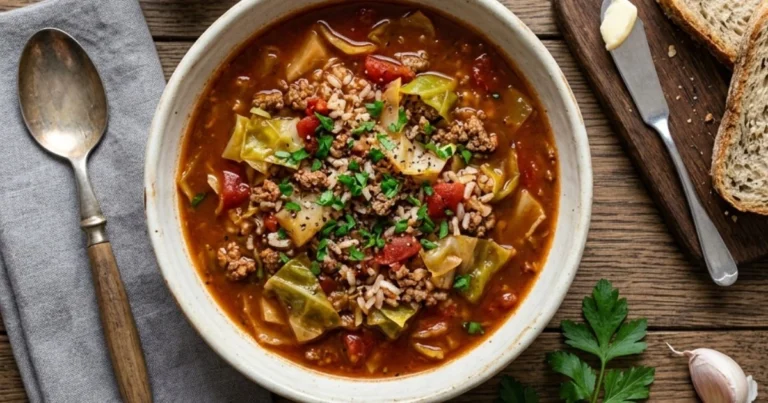
Brown one pound of ground beef separately in a skillet over medium-high heat, breaking it into small pieces with a wooden spoon. Season with salt and pepper while cooking. Drain any excess fat, then add the cooked beef to your soup during Step 4. This transforms your soup from a light meal into a protein-packed dinner that’s substantial enough to satisfy the heartiest appetite.
Asian-Inspired Cabbage Soup
Replace the Italian herbs with two tablespoons of fresh grated ginger and three tablespoons of soy sauce. Use sesame oil instead of olive oil. Swap green cabbage for napa cabbage, add sliced shiitake mushrooms, and finish with a drizzle of chili oil and a handful of chopped green onions. This version is lighter and brighter, perfect for when you want something different.
Creamy Cabbage Soup
After your soup finishes cooking, stir in one-half cup of heavy cream or full-fat coconut milk for a rich, velvety texture. Top each bowl with crispy bacon pieces and a sprinkle of fresh dill. This indulgent version is perfect for cold winter nights when you need serious comfort food.
Detox Cabbage Soup for Clean Eating
Keep your soup ultra-light by using only vegetables and vegetable broth. Add one teaspoon of ground turmeric and one tablespoon of fresh grated ginger for anti-inflammatory benefits. According to Johns Hopkins Medicine, turmeric contains curcumin, a compound with powerful antioxidant properties that supports overall health. Skip the oil and sauté your vegetables in a bit of broth instead.
Complete Nutritional Information
Per serving (1.5 cups, based on 8 servings):
- Calories: 95
- Protein: 3 grams
- Carbohydrates: 16 grams
- Dietary Fiber: 5 grams
- Total Fat: 3.5 grams
- Saturated Fat: 0.5 grams
- Sodium: 420 milligrams
- Vitamin C: 78% Daily Value
- Vitamin K: 92% Daily Value
- Vitamin A: 45% Daily Value
- Potassium: 12% Daily Value
These values increase significantly if you add protein sources like beans, which add approximately 7 grams of protein per serving, or ground beef, which adds about 10 grams.
What to Serve Alongside Your Cabbage Soup
Bread and Grain Options
- Crusty sourdough bread for dipping into the flavorful broth
- Whole grain crackers for added fiber and crunch
- Garlic bread for a more indulgent meal
- Brown rice served on the side or stirred directly into the soup
Protein Additions to Make It a Complete Meal
- Grilled chicken breast, sliced thin and laid across the top
- Pan-seared salmon for omega-3 fatty acids
- Hard-boiled eggs, halved and placed in each bowl
- Rotisserie chicken shredded and stirred in
Fresh Toppings for Extra Flavor
- Freshly grated parmesan or pecorino romano cheese
- Chopped fresh parsley, dill, or cilantro
- A dollop of sour cream or Greek yogurt
- Homemade croutons for textural contrast
- A drizzle of high-quality olive oil
Troubleshooting Common Cabbage Soup Problems
Your Soup Tastes Bland
You’ve under-seasoned or skipped the critical tomato paste caramelization step. Always taste your soup before serving and add salt incrementally—a little at a time. The lemon juice at the end is also essential; without it, your soup will taste flat and one-dimensional. Don’t skip it.
Your Cabbage Turned Mushy
You overcooked it. Cabbage should be tender with a slight bite, not soft and falling apart. Next time, start checking for doneness at the 12-minute mark. Remember that cabbage continues to soften slightly even after you remove it from heat, so pull it just before you think it’s perfect.
Your Soup Is Too Watery
You added too much liquid or didn’t simmer it long enough. Continue simmering uncovered for an additional 10 minutes to reduce and concentrate the flavors. You can also add a slurry made from one tablespoon of cornstarch mixed with two tablespoons of cold water, stirred into the simmering soup.
Your Soup Tastes Too Acidic
The tomatoes created too much tartness. Balance the acidity by adding a pinch of sugar or a small drizzle of honey. This neutralizes the acid without making your soup sweet. Start with one-quarter teaspoon and taste before adding more.
Your Action Plan: Make This Cabbage Soup Today
You now have everything you need to make a restaurant-quality cabbage soup recipe in your own kitchen. This isn’t just theory—it’s a proven method that works every single time when you follow the steps as written.
The beauty of this soup lies in its reliability. You don’t need to wonder if it will turn out. You don’t need to cross your fingers and hope. You simply follow the instructions, trust the process, and end up with a pot of nutritious, delicious soup that costs pennies per serving and takes 30 minutes from start to finish.
Make a batch this week. Store half in the freezer for busy nights when you need a healthy meal in minutes. Customize it with your favorite proteins and vegetables. Share it with family and friends who will ask for the recipe. Most importantly, enjoy the satisfaction of creating something wholesome, affordable, and genuinely good from simple, everyday ingredients.
Your cabbage soup is waiting. Get cooking, and discover why this simple recipe has become a staple in kitchens around the world. Once you make it, you’ll understand exactly why it works every time, and you’ll keep coming back to it again and again.
Ready for more simple, reliable recipes? Try our [copycat Olive Garden Chicken Gnocchi Soup], [Veggie Beef Soup in Crock Pot], or [Classic Chicken Noodle Soup] for more budget-friendly comfort food that delivers on flavor without demanding hours in the kitchen.




4 Comments
Comments are closed.