
The Best Cabbage and Bacon Recipe
The Best Cabbage and Bacon Recipe: Crispy, Buttery & Ready in 30 Minutes
If you’ve been searching for a cabbage and bacon recipe that actually delivers, one that’s crispy at the edges, deeply savory, and finished in under 30 minutes, you’ve found it. This is not a watery, bland side dish. This is a pan full of caramelized, smoky, buttery cabbage that will have everyone asking for seconds before they’ve finished their first plate.
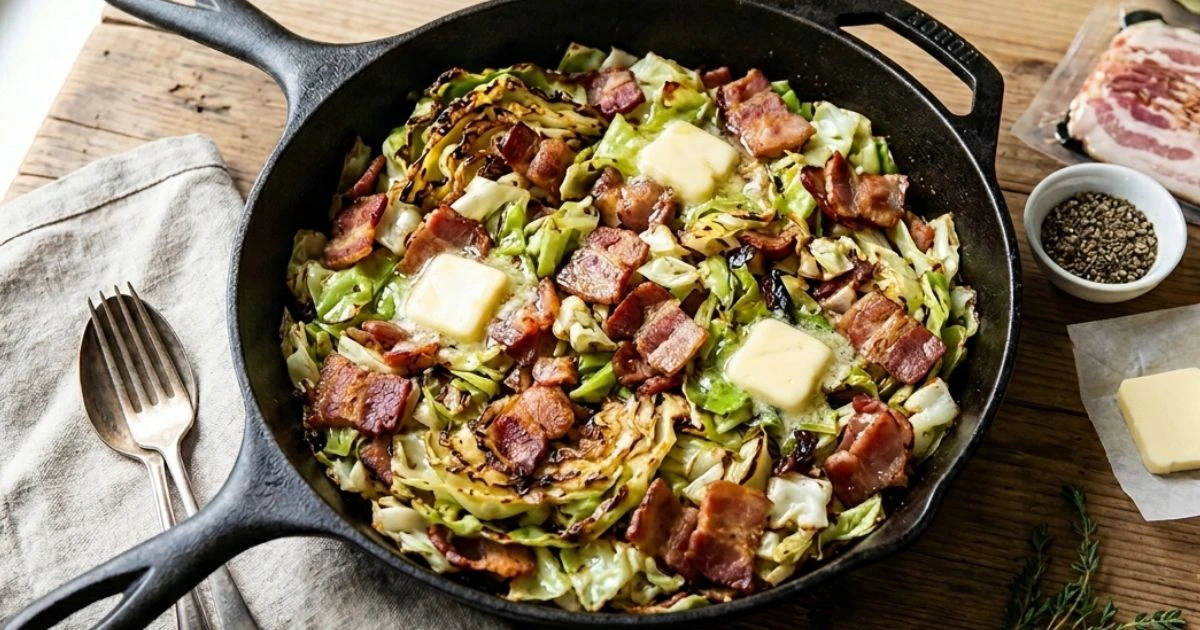

The Best Cabbage and Bacon Recipe
Ingredients
Method
- Slice cabbage into ½-inch strips and pat dry. Slice bacon into ½-inch lardons.
- Place bacon in a cold skillet over medium heat. Cook 5–6 minutes until crispy. Remove bacon, leave fat in pan.
- Add onion to bacon fat, cook 3 minutes. Add garlic and cook 60 seconds, scraping up brown bits.
- Add cabbage and season with paprika, pepper, and salt. Cook over medium-high heat 10–12 minutes, stirring every 2–3 minutes, until caramelized.
- Add butter and apple cider vinegar. Return bacon to pan, toss, taste, adjust seasoning. Garnish with parsley and serve.
You’re going to love this recipe for reasons that go beyond flavor. It uses one pan, requires fewer than 10 ingredients, and costs almost nothing to make. Whether you’re cooking for your family on a Wednesday night or looking for a reliable side that pairs with nearly anything, this cabbage and bacon recipe is the answer. Follow the steps exactly as written and you will get perfect results, every single time.
Why This Cabbage and Bacon Recipe Works Every Time
The Right Cabbage Makes All the Difference
Not all cabbage is created equal for this dish. You want a medium head of green cabbage, about two pounds, and you want it fresh, firm, and tightly packed. Green cabbage holds its structure through high-heat cooking in a way that savoy or napa cabbage simply doesn’t. When you slice it into half-inch strips, it caramelizes beautifully at the edges while staying slightly tender at the core.
Before you do anything else, slice your cabbage and pat it completely dry with paper towels. This single step separates mediocre results from excellent ones. Moisture on the surface of cabbage turns into steam in the pan, and steam is the enemy of caramelization. A dry surface means direct contact with the hot fat, which means browning, which means flavor.
If you enjoy exploring different ways to prepare cabbage, take a look at our Boiled Cabbage Recipe, a lighter method that’s equally reliable and fast.
Why Bacon Is the Secret Flavor Weapon
The bacon in this recipe isn’t just a protein, it’s your flavor base. When you render bacon slowly in a cold pan, it releases fat gradually and evenly, which means crispier bacon and a rich, smoky foundation for everything that follows. That rendered fat is your cooking medium for the onion, the garlic, and the cabbage.
You’re going to use thick-cut bacon for this recipe. Thin-cut bacon cooks too quickly and doesn’t produce enough fat. Thick-cut gives you satisfying lardons, chunky pieces with a proper bite, and a generous pool of rendered fat that coats every strand of cabbage.
Do not drain the fat. Resist the urge. That fat is where every layer of flavor in this dish lives.
The Simple Techniques That Guarantee Crispy Results
Three non-negotiable rules govern this recipe: high heat, a dry pan, and patience. You cannot rush caramelized cabbage. You cook it over medium-high heat, and you let it sit, stirring only every two to three minutes, so the edges have time to make contact with the hot surface and brown.
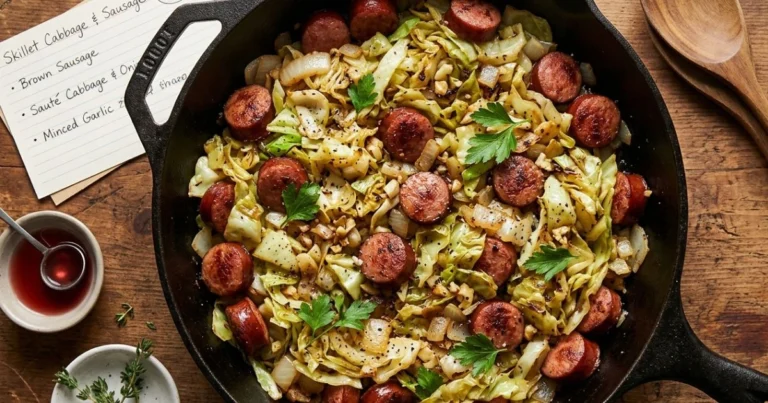
The same technique is at work in our Easy Cabbage and Sausage Recipe, which uses a very similar method with exceptional results. Once you understand how cabbage behaves in a hot pan, you’ll be able to adapt these skills to dozens of dishes.
Ingredients for Cabbage and Bacon Recipe
Before you start cooking, gather everything and have it ready at the stove. This recipe moves fast.
Main Ingredients:
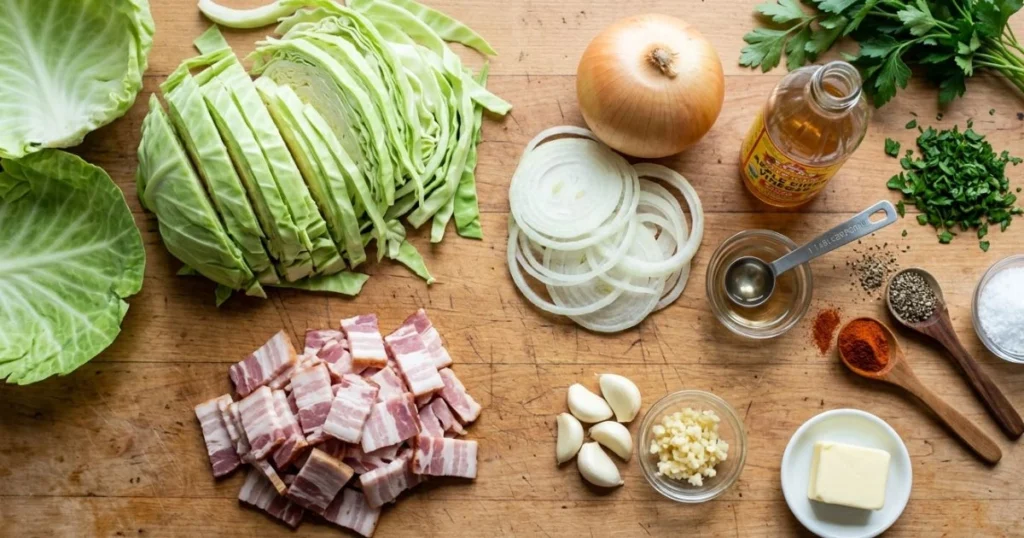
- 1 medium head green cabbage (about 2 lbs), sliced into ½-inch strips
- 6–8 strips thick-cut bacon, sliced into ½-inch lardons
- 1 medium onion, thinly sliced
- 4 cloves garlic, minced
- 2 tablespoons unsalted butter
- ½ teaspoon smoked paprika
- ½ teaspoon freshly ground black pepper
- Salt to taste
- 1 tablespoon apple cider vinegar (optional, but recommended)
- Fresh flat-leaf parsley for garnish
Optional Add-ins:
- ½ teaspoon red pepper flakes for heat
- ½ teaspoon caraway seeds for a Central European character
- ¼ cup chicken broth for a slightly more tender result
According to the USDA FoodData Central, one cup of raw green cabbage contains just 22 calories and delivers 2 grams of fiber, making this one of the most nutritious dishes you can prepare at this price point.
Ingredient Substitutions and Variations
This recipe is genuinely flexible. If you don’t have thick-cut bacon, pancetta works beautifully, it’s slightly milder with a less smoky profile. Turkey bacon is a leaner option, though you’ll need to supplement with a tablespoon of olive oil since it renders less fat. Smoked sausage sliced into rounds is another excellent variation, as shown in our Easy Cabbage and Sausage Recipe.
Red cabbage can be substituted with excellent results, though it requires three to four additional minutes of cooking time and will turn the dish a striking deep purple. It’s a beautiful option if you’re serving this to guests.
If you’re watching your saturated fat intake, you can replace the butter with a tablespoon of olive oil and still achieve a delicious result. The dish will be slightly less rich but no less flavorful.
Equipment You’ll Need
The Best Pan for Cabbage and Bacon
A 12-inch cast iron skillet is your ideal tool for this recipe. Cast iron holds heat evenly and creates the intense, sustained contact temperature needed to caramelize cabbage properly. A large stainless steel pan is an excellent second choice.
Whatever pan you choose, it must be large enough to hold the cabbage without overcrowding. When cabbage is piled too high, it steams rather than sears. If your pan is smaller than 12 inches, cook the cabbage in two batches. According to Serious Eats, a well-seasoned cast iron skillet is one of the most versatile and durable tools in any home kitchen, and for high-heat vegetable cooking, it genuinely earns that reputation.
How to Make Cabbage and Bacon — Step-by-Step Instructions
Step 1 — Prep Your Cabbage and Bacon (5 minutes)
Remove the outer leaves of your cabbage and slice it into half-inch strips. Place the sliced cabbage on a clean kitchen towel or paper towels and press firmly to remove as much surface moisture as possible. This step is not optional, it’s the difference between caramelized and steamed.
Slice your bacon into half-inch pieces, cutting across the strips to create lardons. These chunky pieces cook evenly and give you satisfying pops of texture in the finished dish. Have your onion sliced, your garlic minced, and your seasonings measured and ready before you turn on the heat. This recipe moves at a good pace and you want your hands free to cook.
Step 2 — Render the Bacon Until Crispy (5–6 minutes)
Place your bacon pieces in a cold skillet. Turn the heat to medium. Starting bacon in a cold pan allows the fat to render gradually, producing crispier pieces and a more even cook. You’re not in a rush at this stage — patience here pays off.
Cook the bacon, stirring occasionally, for 5 to 6 minutes until the pieces are deeply golden and the fat has rendered fully. Use a slotted spoon to remove the bacon to a plate lined with paper towels. Leave every drop of that fat in the pan. That fat is your flavor foundation for everything that follows.
Step 3 — Sauté the Onion and Garlic (3–4 minutes)
Add the sliced onion to the bacon fat in the pan and increase the heat to medium-high. Cook, stirring occasionally, for about 3 minutes until the onion softens and picks up some golden color at the edges.
Add the minced garlic and cook for exactly 60 seconds, stirring constantly. Garlic burns quickly and burnt garlic will ruin the dish. You’ll smell it as soon as it’s ready, fragrant and slightly sweet. Use a wooden spoon to scrape up any browned bits stuck to the bottom of the pan. That browned residue, called fond, is concentrated flavor and you want it incorporated into the dish.
Step 4 — Add the Cabbage and Cook Until Caramelized (10–12 minutes)
Add your dried cabbage to the pan. If it doesn’t all fit comfortably, add half first, let it cook down for 2 minutes, then add the rest. Season immediately with smoked paprika, black pepper, and a generous pinch of salt.
Increase heat to medium-high if it isn’t there already. Now comes the part that requires patience: let the cabbage sit without stirring for 2 to 3 minutes at a time. This is how you build those golden, slightly charred edges that make this dish extraordinary. When you do stir, turn the cabbage from the bottom to expose fresh surfaces to the hot pan.
The cabbage will reduce dramatically in volume, by roughly half, as it cooks and releases its liquid. This is completely normal and exactly what you want. Continue cooking for 10 to 12 minutes total, until the cabbage is tender, deeply golden in places, and has a rich, caramelized fragrance.
For a helpful comparison of techniques, the food scientists at Serious Eats explain the Maillard reaction, the chemical process responsible for that golden browning, in accessible detail. Understanding why this works makes you a more confident cook.
Step 5 — Finish with Butter and Vinegar (2 minutes)
Reduce the heat to medium-low. Add the butter and toss the cabbage to coat, letting it melt and gloss everything in the pan. If you’re using apple cider vinegar, add it now, a single tablespoon cuts through the richness and brightens the entire dish without making it taste sour.
Return the crispy bacon pieces to the pan and toss everything together. Taste and adjust the salt and pepper. The dish should taste smoky, savory, slightly sweet from the caramelized cabbage, and bright from the vinegar. If something feels flat, add more salt. If it feels too rich, add another splash of vinegar.
Transfer to a serving dish, scatter fresh parsley over the top, and serve immediately.
Timing Summary:
| Step | Time |
|---|---|
| Prep | 5 minutes |
| Render bacon | 5–6 minutes |
| Onion & garlic | 3–4 minutes |
| Cook cabbage | 10–12 minutes |
| Finish & plate | 2 minutes |
| Total | ~30 minutes |
Tips, Tricks, and Variations for Cabbage and Bacon Recipe
How to Get Perfectly Caramelized Cabbage Every Time
The three rules bear repeating: dry cabbage, hot pan, and patience. Every minute you give the cabbage without stirring is a minute of direct contact with the hot surface, which is a minute of caramelization. This is where the flavor is built.
If you find the cabbage is browning too quickly on the outside before it softens in the center, add two tablespoons of chicken broth and cover the pan for 2 minutes. The steam will gently cook the interior while the edges continue to brown once you remove the lid.
Cabbage and Bacon with Potatoes
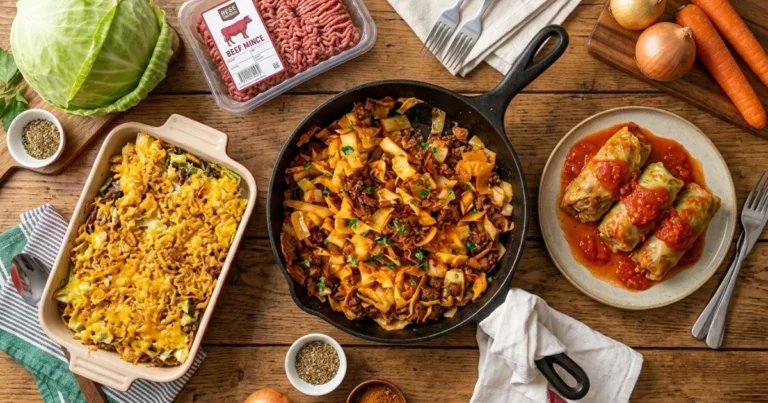
For a complete one-pan meal, add diced potatoes that have been parboiled for 8 minutes (until just barely fork-tender). Add them along with the cabbage in Step 4. They’ll soak up the bacon fat and develop crispy edges of their own. This transforms the recipe from a side dish into a satisfying dinner. For more hearty cabbage combinations, browse our Beef Mince and Cabbage Recipes for weeknight inspiration.
Cabbage and Bacon Soup Variation
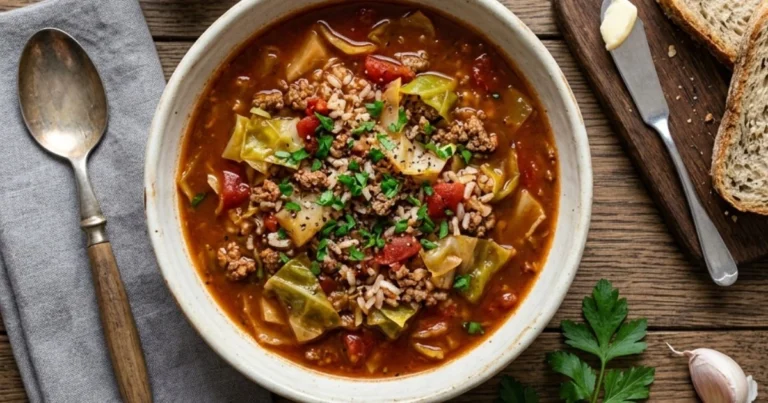
After Step 4, when your cabbage is caramelized, add 3 cups of good-quality chicken broth and bring to a simmer. Cook for 15 minutes. Add a can of drained white beans or a handful of green lentils and simmer for another 10 minutes. You’ve just made a deeply flavored cabbage and bacon soup with almost no additional effort. Our Easy Cabbage Soup Recipe is another reliable version worth bookmarking.
Make It Low-Carb / Keto-Friendly
This recipe is naturally keto-compliant. Green cabbage contains roughly 5 grams of net carbohydrates per cup when cooked, making it an ideal base for low-carb cooking. The bacon fat and butter keep the fat content high, and the dish is filling and satisfying without spiking blood sugar. According to Healthline’s analysis of cabbage nutrition, cabbage is also high in Vitamin C, Vitamin K, and contains compounds associated with reduced inflammation.
How to Store and Reheat
Store leftover cabbage and bacon in an airtight container in the refrigerator for up to four days. To reheat, place in a skillet over medium heat with a splash of water or chicken broth, stirring occasionally until heated through. The bacon will lose some of its crispiness but the overall dish will still be deeply flavorful.
Freezing is not recommended. Cabbage has a very high water content and becomes mushy and unpleasant after thawing.
What to Serve With Cabbage and Bacon
As a Side Dish
This cabbage and bacon recipe is a natural partner for roasted pork tenderloin, grilled sausages, or pan-seared chicken thighs. The smoky, savory flavors complement virtually any meat-based main course. Serve it alongside mashed potatoes or with thick slices of crusty bread for mopping up the pan juices, and those juices are worth mopping up.
For a simple, unfussy weeknight plate, pair it directly with the protein from our Easy Cabbage and Sausage Recipe. The two dishes share a flavor profile and cook in roughly the same amount of time, making them ideal companions.
As a Complete Meal
Top a generous portion of this cabbage and bacon with a fried egg and you have a complete, protein-rich dinner that costs almost nothing and takes minutes to prepare. The runny yolk mingles with the bacon fat and caramelized cabbage in a way that’s genuinely special.
You can also serve it over egg noodles or white rice to stretch it further, or wrap it in a warm flour tortilla with a spoonful of sour cream for a surprising but excellent result.
For more ideas built around this underrated vegetable, visit our complete collection of Cabbage Recipes on Recipbest.
Nutrition Information (Per Serving, Approximate)
Based on 4 servings:
| Nutrient | Amount |
|---|---|
| Calories | ~280 kcal |
| Protein | 11g |
| Total Fat | 20g |
| Carbohydrates | 12g |
| Dietary Fiber | 4g |
| Sodium | ~580mg |
Nutritional values are approximate and will vary based on the bacon brand, butter quantity, and serving size. For precise data, reference the USDA FoodData Central database.
Conclusion
This cabbage and bacon recipe is exactly what a weeknight dinner should be: fast, economical, deeply satisfying, and endlessly reliable. The technique is straightforward, the ingredients are accessible, and the result is a pan of food that tastes far more complex and intentional than the effort required to make it.
You now have everything you need, the ingredients, the method, the timing, and the variations, to make this recipe your own. Go make it tonight. And when you do, explore the full range of Cabbage Recipes on Recipbest to keep that creativity going all week long.
One Comment
Comments are closed.