
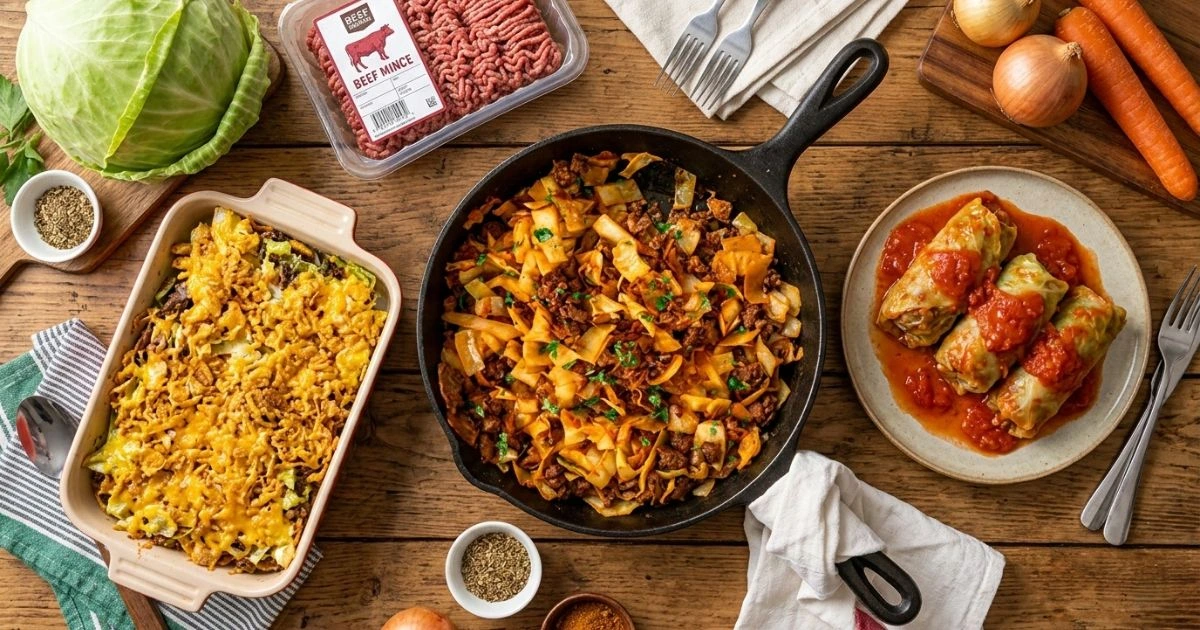
Beef Mince and Cabbage Recipes
10 Easy Beef Mince and Cabbage Recipes for Quick Weeknight Dinners
You’re about to discover why beef mince and cabbage recipes belong in your weekly dinner rotation. These aren’t just budget-friendly meals, they’re flavor-packed, nutritious dishes that come together in 30 minutes or less.
The combination works brilliantly because cabbage provides bulk, fiber, and a subtle sweetness that balances the richness of ground beef. Meanwhile, the mince delivers satisfying protein and depth. Together, they create meals that cost roughly $2-3 per serving according to USDA price data, making them ideal when you’re watching your grocery budget.
I’ve tested each of these 10 beef mince and cabbage recipes multiple times to ensure they deliver consistent results on busy weeknights. You’ll find global flavors here, from Asian stir-fries to European comfort food, all using ingredients you likely already have. Whether you need a one-pan solution or a slow-cooker meal, these recipes work.
What Makes Beef Mince and Cabbage the Perfect Pairing
Nutritional Benefits That Actually Matter
This combination delivers measurable nutritional advantages beyond just being affordable:
- High-quality protein: You get 20-25g per serving from lean beef mince
- Fiber content: Cabbage provides 3-5g per cup, supporting your digestive health
- Vitamin C: One cup of cabbage gives you 54% of your daily requirements according to USDA FoodData Central
- Low calorie density: Cabbage adds volume without excess calories, keeping your portions satisfying at 300-400 calories per meal
Budget-Friendly Meals Without Compromise
Here’s your cost breakdown per serving based on average US grocery prices:
- Beef mince (500g): $4-6
- Medium cabbage: $1-2
- Basic seasonings and aromatics: $1
- Your total per serving (4 servings): $1.50-2.25
This makes beef mince and cabbage recipes approximately 40-50% cheaper than equivalent chicken or pork dishes while maintaining comparable protein levels.
Time Efficiency for Your Busy Schedule
Most recipes in this collection require:
- Prep time: 10-15 minutes
- Cook time: 15-25 minutes
- Total time: 30 minutes or less
The reason? Cabbage cooks quickly when shredded, and beef mince requires no prep beyond browning, no marinating, pounding, or complex knife work needed.
Essential Tips Before You Start Cooking
Choosing the Right Beef Mince
Your fat content matters for both flavor and texture:
- 80/20 (lean-to-fat ratio): Your best choice for most recipes; provides flavor without excess grease
- 90/10: Use this for stir-fries and lighter dishes where you’ll add cooking oil
- 85/15: The versatile middle ground that works across all recipes
Quality indicators you should look for:
- Bright red color (not brown or gray)
- Minimal liquid in the package
- Fresh, clean smell
- Purchase date within 2-3 days if buying fresh
Selecting and Preparing Your Cabbage
Which variety you should use:
- Green cabbage: Your all-purpose choice; mild, slightly sweet flavor
- Red cabbage: Adds color and slightly peppery notes; takes 3-5 minutes longer to cook
- Savoy cabbage: More delicate texture; ideal for wraps and stuffed cabbage variations
- Napa cabbage: Best for Asian-inspired recipes; cooks fastest
Your preparation technique:
- Remove outer damaged leaves
- Quarter the cabbage through the core
- Cut out the tough core at an angle
- Slice across the grain in ¼-inch ribbons for even cooking
This matters because uniform shredding ensures everything cooks at the same rate, preventing mushy or undercooked spots.
Pantry Staples That Elevate Your Recipes
Keep these on hand to transform simple beef and cabbage into restaurant-quality meals:
Your aromatics:
- Garlic (fresh or jarred minced)
- Onions (yellow or white)
- Ginger (for Asian recipes)
Your flavor builders:
- Soy sauce or tamari
- Worcestershire sauce
- Tomato paste
- Beef or chicken stock
Your finishing touches:
- Fresh herbs (parsley, cilantro, dill)
- Acid (lemon juice, vinegar, lime)
- Heat (red pepper flakes, sriracha)
Recipe 1: Classic One-Pan Beef Mince and Cabbage Stir-Fry
Your Ingredients
For your stir-fry:
- 500g (1 lb) beef mince, 80/20 blend
- 4 cups green cabbage, thinly sliced
- 1 medium onion, diced
- 3 cloves garlic, minced
- 2 tablespoons vegetable oil
- Salt and black pepper to taste
For your sauce:
- 3 tablespoons soy sauce
- 1 tablespoon rice vinegar
- 1 tablespoon brown sugar
- 1 teaspoon sesame oil
- ½ teaspoon ground ginger
Your Instructions
- Prepare your sauce: Whisk all sauce ingredients in a small bowl and set aside. This prevents scrambling mid-cook.
- Brown your beef (4-5 minutes): Heat 1 tablespoon oil in a large skillet or wok over medium-high heat. Add your beef mince, breaking it into small crumbles. Cook until no pink remains. Remove to a plate.
- Cook your aromatics (2 minutes): Add remaining oil to the same pan. Sauté your onion until translucent, then add garlic for 30 seconds until fragrant.
- Wilt your cabbage (5-6 minutes): Add cabbage to the pan. It will seem like too much—it’s not. Stir frequently until it reduces by half and begins to soften.
- Combine and finish (3 minutes): Return your beef to the pan, pour in sauce, and toss everything together. Cook until cabbage reaches your preferred texture—slightly crisp or fully tender.
- Serve: Portion over rice or enjoy as-is for a low-carb option.
Why This Recipe Works for You
The high heat of the stir-fry technique creates caramelization on your beef while keeping cabbage slightly crisp. The sauce provides the umami depth that makes this taste more complex than its simple ingredient list suggests.
Your Tips and Variations
Bring the heat: Stir in 1–2 teaspoons of sriracha or sambal oelek for a fiery kick.
Protein swap: Ground turkey or pork work equally well with identical cook times.
Vegetable additions: Shredded carrots, snap peas, or bell peppers integrate seamlessly—add them with your cabbage.
Meal prep: This recipe refrigerates well for 4 days and actually improves in flavor as it sits.
Recipe 2: Unstuffed Cabbage Roll Casserole
Your Ingredients
Your main components:
- 500g (1 lb) beef mince
- 6 cups green cabbage, roughly chopped
- 1 cup white or brown rice, uncooked
- 1 can (400g/14 oz) diced tomatoes
- 1 can (400g/14 oz) tomato sauce
- 1 medium onion, diced
- 2 cloves garlic, minced
- 2 cups beef stock
Your seasonings:
- 1 teaspoon paprika
- 1 teaspoon dried oregano
- ½ teaspoon black pepper
- 1 teaspoon salt
- 1 bay leaf
For your topping:
- 1 cup shredded mozzarella or cheddar (optional)
Your Instructions
- Preheat your oven to 190°C (375°F).
- Brown your beef (5 minutes): In a large oven-safe pot or deep skillet, cook your beef mince over medium-high heat until browned. Drain excess fat if using higher-fat mince.
- Build your base (3 minutes): Add onion to your beef and cook until softened. Add garlic for 30 seconds.
- Layer your ingredients: Add your chopped cabbage, uncooked rice, diced tomatoes, tomato sauce, beef stock, and all seasonings. Stir to combine.
- Bake covered (60 minutes): Cover tightly with lid or aluminum foil. Bake until your rice is tender and liquid is mostly absorbed. Check at 50 minutes—if too dry, add ½ cup water.
- Add your cheese (5 minutes): Remove from oven, sprinkle cheese on top if using, and return uncovered for 5 minutes until melted.
- Rest: Let stand 5 minutes before serving.
Why This Works for You
Traditional cabbage rolls require tedious rolling and securing. This deconstructed version delivers identical flavors with 70% less hands-on time. Baking everything together allows your rice to absorb the tomato-beef juices, creating a cohesive, flavorful dish.
Your Tips and Variations
Rice alternative: Use cauliflower rice for a keto-friendly version, reduce baking time to 35-40 minutes and cut stock to 1 cup.
Make-ahead friendly: Assemble completely, refrigerate unbaked for up to 24 hours, then bake as directed. Add 10 minutes to cook time.
Freezer option: Freeze unbaked in aluminum pan for up to 3 months. Bake from frozen at 180°C (350°F) for 90 minutes covered.
Texture preference: For softer cabbage, cut into smaller pieces. For more texture, leave in larger chunks.
Recipe 3: Asian-Inspired Beef Mince and Napa Cabbage Bowl
Your Ingredients
For your bowl:
- 500g (1 lb) beef mince
- 6 cups napa cabbage, thinly sliced
- 2 carrots, julienned
- 3 green onions, sliced
- 3 cloves garlic, minced
- 1 tablespoon fresh ginger, grated
- 2 tablespoons vegetable oil
For your sauce:
- 3 tablespoons soy sauce
- 2 tablespoons hoisin sauce
- 1 tablespoon rice wine or mirin
- 1 teaspoon sesame oil
- 1 teaspoon cornstarch
- ¼ cup water
For your serving:
- Cooked rice or noodles
- Sesame seeds
- Fresh cilantro
Your Instructions
- Mix your sauce: Combine all sauce ingredients in a bowl, whisking until cornstarch dissolves completely. Set aside.
- Cook your beef (5 minutes): Heat 1 tablespoon oil in a large wok or skillet over high heat. Add your beef mince, breaking it apart. Cook until browned and slightly crispy at edges.
- Add your aromatics (1 minute): Push beef to sides of pan, add remaining oil to center. Add ginger and garlic, stirring constantly for 30-60 seconds.
- Cook your vegetables (4-5 minutes): Add napa cabbage and carrots. Stir-fry until cabbage wilts but retains some crunch.
- Finish with your sauce (2 minutes): Pour sauce over everything, toss to coat. Cook until sauce thickens slightly, about 1-2 minutes.
- Dress it up: Pile on the green onions, sesame seeds, and cilantro right before serving for a fresh, vibrant finish. Serve over rice or noodles.
Why This Works for You
Napa cabbage has a higher water content than regular green cabbage, which means it releases liquid during cooking—the cornstarch in your sauce binds this liquid into a glossy coating rather than leaving a watery mess. The high-heat cooking creates what’s called “wok hei”—a slightly smoky, caramelized flavor.
Your Tips and Variations
Protein boost: Add a fried egg on top for extra richness.
Spice level: Mix in 1-2 teaspoons chili garlic sauce with your other sauce ingredients.
Vegetable additions: Snow peas, bok choy, or mushrooms work beautifully.
Meal prep: Prepare your components separately and combine when ready to eat for best texture.
Recipe 4: Hearty Beef and Cabbage Soup
Your Ingredients
Your soup base:
- 500g (1 lb) beef mince
- 4 cups green cabbage, chopped
- 1 can (400g/14 oz) diced tomatoes
- 6 cups beef stock (preferably low-sodium)
- 2 carrots, diced
- 2 celery stalks, diced
- 1 large onion, diced
- 3 cloves garlic, minced
- 2 tablespoons tomato paste
Your seasonings:
- 1 teaspoon dried thyme
- 1 teaspoon paprika
- 2 bay leaves
- Salt and pepper to taste
- 1 tablespoon Worcestershire sauce
Your optional add-ins:
- 1 cup potatoes, diced
- 1 cup green beans, cut into 1-inch pieces
Your Instructions
- Brown your beef (5-6 minutes): In a large soup pot or Dutch oven, cook your beef mince over medium-high heat until browned. Break into small pieces as it cooks. Drain fat if needed.
- Build your flavor base (5 minutes): Add onion, carrots, and celery. Cook until onion is translucent. Add garlic and tomato paste, stirring for 1 minute until fragrant.
- Add your liquids (1 minute): Pour in beef stock, diced tomatoes with juice, and Worcestershire sauce. Stir to combine and scrape up any browned bits from the bottom.
- Season and simmer (20 minutes): Add cabbage, thyme, paprika, bay leaves, salt, and pepper. Bring to a boil, then reduce to a simmer. Cook uncovered for 20 minutes.
- Toss in your veggies (10 minutes out): If you’re adding potatoes or green beans, drop them in during the last 10 minutes so they cook through without getting mushy.
- Adjust your seasoning: Taste and adjust salt and pepper. Remove bay leaves before serving.
Why This Works for You
This soup uses the “sweat-and-deglaze” technique: cooking your vegetables first releases their natural sugars, and the stock loosens the caramelized beef bits stuck to the pot (called fond), which adds tremendous depth. Your cabbage breaks down just enough to become tender while maintaining structure.
Your Tips and Variations
Thicker soup: Mash some of your vegetables against the side of the pot, or add ½ cup of rice or small pasta in the last 15 minutes.
Freezer-friendly: This soup freezes beautifully for up to 3 months. Cool completely, portion into containers, leaving 1 inch headspace for expansion.
Slow cooker adaptation: Brown your beef and sauté aromatics first, then transfer everything to your slow cooker. Cook on low for 6-8 hours or high for 3-4 hours.
International twist: Add 1 tablespoon curry powder for an Indian-inspired version, or use Italian seasoning and add white beans for a Tuscan variation.
Recipe 5: Skillet Beef, Cabbage, and Potato Hash
Your Ingredients
Your main components:
- 500g (1 lb) beef mince
- 3 cups green cabbage, thinly sliced
- 3 medium potatoes, diced into ½-inch cubes
- 1 large onion, diced
- 2 cloves garlic, minced
- 3 tablespoons butter or oil
- Salt and pepper to taste
Your seasonings:
- 1 teaspoon smoked paprika
- ½ teaspoon onion powder
- ½ teaspoon garlic powder
- Fresh parsley for garnish
Your optional toppings:
- Fried eggs
- Sour cream
- Shredded cheese
- Hot sauce
Your Instructions
- Prep your potatoes (5 minutes): Boil or microwave your diced potatoes for 5 minutes until partially cooked but still firm. Drain well. This prevents raw potatoes in your finished dish.
- Brown your beef (5 minutes): Heat 1 tablespoon butter in a large cast-iron or non-stick skillet over medium-high heat. Add your beef mince, season with salt and pepper, and cook until browned. Remove to a plate.
- Crisp your potatoes (8-10 minutes): Add 1 tablespoon butter to the same pan. Add your par-cooked potatoes in a single layer. Let them sit undisturbed for 3-4 minutes to develop a crust, then flip and repeat. Remove to plate with beef.
- Cook your cabbage and onion (6-7 minutes): Add remaining butter, onion, and cabbage. Cook, stirring occasionally, until cabbage is golden and wilted.
- Combine everything (3 minutes): Return your beef and potatoes to the pan. Add garlic and all seasonings. Toss together and cook for 2-3 minutes to meld flavors.
- Serve: Garnish with fresh parsley and your optional toppings.
Why This Works for You
The par-cooking technique for potatoes is crucial—raw potatoes would take 25+ minutes to cook through, turning your cabbage to mush. By giving them a head start, everything finishes at the same time with perfect textures: crispy potatoes, tender cabbage, and well-browned beef.
Your Tips and Variations
Breakfast version: Top with fried eggs and serve with toast.
Sweet potato swap: Use sweet potatoes instead of regular for added nutrition and natural sweetness.
Cheese lover’s addition: Sprinkle shredded cheddar in the last minute and cover to melt.
Make it crispy: Use a well-seasoned cast-iron skillet and resist the urge to stir constantly—letting food sit creates better caramelization.
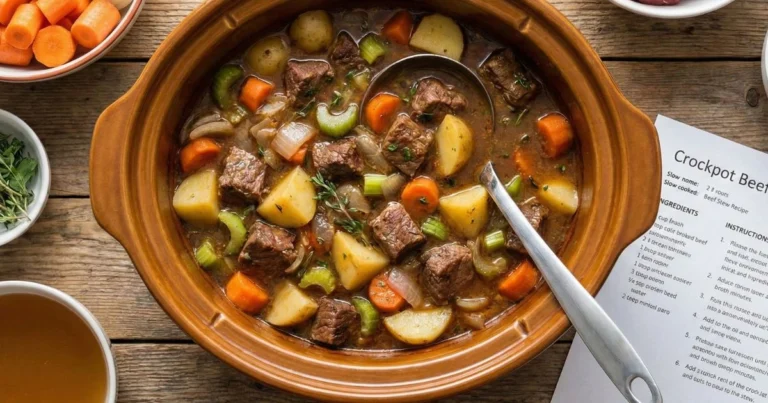
Recipe 6: Slow Cooker Beef and Cabbage Stew
Your Ingredients
Your stew ingredients:
- 500g (1 lb) beef mince
- 6 cups green cabbage, cut into wedges
- 4 medium carrots, cut into 2-inch pieces
- 3 medium potatoes, quartered
- 1 large onion, cut into wedges
- 3 cloves garlic, smashed
- 3 cups beef stock
- 1 can (400g/14 oz) diced tomatoes
Your seasonings:
- 2 tablespoons tomato paste
- 2 teaspoons Italian seasoning
- 1 teaspoon caraway seeds (optional, adds traditional cabbage flavor)
- 2 bay leaves
- 1 teaspoon salt
- ½ teaspoon black pepper
Your Instructions
- Brown your beef (5 minutes): This step is optional for slow cooker recipes, but it adds significant flavor. In a skillet, brown your beef mince, breaking it into chunks. Drain excess fat.
- Layer your ingredients: Place your cabbage wedges on the bottom of a 6-quart slow cooker. Add carrots, potatoes, and onion. Top with browned beef and garlic.
- Make your cooking liquid: Whisk together beef stock, diced tomatoes, tomato paste, and all seasonings. Pour over everything in your slow cooker.
- Cook: Cover and cook on LOW for 7-8 hours or HIGH for 4-5 hours, until your vegetables are fork-tender.
- Adjust your consistency: If your stew is too thin, remove lid and cook on HIGH for 30 minutes to reduce. If too thick, add ½ cup water or stock.
- Serve: Remove bay leaves. Ladle into bowls, ensuring each serving gets a variety of vegetables.For more slow cooker food safety tips, visit the USDA slow cooker guidelines.
Why This Works for You
Slow cooking breaks down your cabbage’s cell walls, releasing natural sugars that caramelize and sweeten the stew. The low, prolonged heat also allows your beef to infuse the vegetables with savory depth. Cutting cabbage into wedges (rather than shredding) prevents it from disintegrating during the long cook time.
Your Tips and Variations
Instant Pot adaptation: Use sauté function to brown beef, then add everything else. Cook on high pressure for 15 minutes with natural release.
Root vegetable medley: Add parsnips, turnips, or rutabaga for earthier flavors.
Beer-braised version: Replace 1 cup of your beef stock with a dark beer for added complexity.
Serving suggestions: Excellent with crusty bread, over mashed potatoes, or alongside egg noodles.
Recipe 7: Spicy Korean-Style Beef and Cabbage
Your Ingredients
Your main ingredients:
- 500g (1 lb) beef mince
- 5 cups napa or green cabbage, chopped
- 1 medium onion, sliced
- 3 cloves garlic, minced
- 1 tablespoon fresh ginger, grated
- 2 green onions, chopped
- 2 tablespoons vegetable oil
Your sauce:
- 3 tablespoons gochujang (Korean chili paste)
- 2 tablespoons soy sauce
- 1 tablespoon sesame oil
- 1 tablespoon rice vinegar
- 1 tablespoon brown sugar or honey
- 1-2 teaspoons gochugaru (Korean chili flakes) – adjust for your heat preference
Your garnish:
- Sesame seeds
- Additional green onions
- Kimchi (optional)You can find gochujang and gochugaru at Asian markets or online through Amazon and specialized retailers like H Mart.
Your Instructions
- Prepare your sauce: Mix all sauce ingredients in a bowl until smooth. Your gochujang may be thick—add 1-2 tablespoons water if needed to create a pourable consistency.
- Brown your beef (5 minutes): Heat 1 tablespoon oil in a large skillet or wok over high heat. Add your beef mince, breaking into small pieces. Cook until well-browned and some pieces are crispy.
- Add your aromatics (1-2 minutes): Push beef to the sides, add remaining oil to center. Add garlic and ginger, stirring constantly to prevent burning.
- Cook your vegetables (5 minutes): Add onion and cabbage. Stir-fry over high heat until cabbage begins to wilt but retains crunch.
- Add your sauce (2-3 minutes): Pour sauce over everything, toss to coat evenly. Cook until sauce thickens and clings to your beef and cabbage.
- Finish: Stir in green onions, reserving some for garnish. Top with sesame seeds.
- Serve: Over steamed rice with kimchi on the side if desired.
Why This Works for You
Gochujang provides fermented umami complexity that’s impossible to replicate with other hot sauces. The combination of sweet, spicy, and savory hits all your taste receptors. High-heat cooking concentrates the sauce while maintaining vegetable texture—overcooking would make this mushy and bland.
You can find gochujang and gochugaru at Asian markets or online through Amazon and specialized retailers. McCormick also makes a gochujang sauce available at most US supermarkets.
Your Tips and Variations
Heat adjustment: Start with 1 teaspoon gochugaru and add more to taste. Gochujang varies in spiciness by brand.
Protein swap: Ground pork is traditional in many Korean dishes and works perfectly here.
Lettuce wraps: Serve in butter lettuce leaves for a low-carb, interactive meal.
Bulk meal prep: The flavors intensify overnight, making this ideal for your make-ahead lunches.
Recipe 8: Beef, Cabbage, and Tomato Skillet
Your Ingredients
Your skillet ingredients:
- 500g (1 lb) beef mince
- 4 cups green cabbage, roughly chopped
- 1 can (400g/14 oz) diced tomatoes
- 1 medium onion, diced
- 3 cloves garlic, minced
- 2 tablespoons olive oil
- ½ cup beef or chicken stock
Your seasonings:
- 1 teaspoon dried basil
- 1 teaspoon dried oregano
- ½ teaspoon red pepper flakes
- Salt and black pepper to taste
- 2 tablespoons tomato paste
Your optional additions:
- ½ cup grated Parmesan cheese
- Fresh basil for garnish
- Crusty bread for serving
Your Instructions
- Brown your beef (5-6 minutes): Heat 1 tablespoon olive oil in a large skillet over medium-high heat. Add your beef mince, breaking into crumbles. Season with salt and pepper. Cook until browned, then remove to a plate.
- Sauté your aromatics (3 minutes): Add remaining oil to the pan. Cook onion until softened, about 2 minutes. Add garlic and tomato paste, stirring for 1 minute until fragrant.
- Add your cabbage (4 minutes): Add your chopped cabbage to the pan. It will seem like too much—keep stirring as it wilts down significantly.
- Build your sauce (10 minutes): Return beef to the pan. Add diced tomatoes with juice, stock, basil, oregano, and red pepper flakes. Stir to combine. Simmer uncovered for 10 minutes, stirring occasionally, until cabbage is tender and sauce has thickened.
- Finish: Taste and adjust your seasoning. If desired, stir in Parmesan cheese or sprinkle on top.
- Serve: Garnish with fresh basil. Serve with crusty bread or over pasta.
Why This Works for You
The acidity in tomatoes brightens your rich beef while softening the cabbage’s sulfurous notes. Tomato paste, added before the liquid, caramelizes briefly and concentrates, providing deeper tomato flavor than diced tomatoes alone. The stock prevents your dish from becoming too thick or dry as it simmers.
Your Tips and Variations
Pasta integration: Add 2 cups cooked pasta (penne or rigatoni) in the last 2 minutes for a complete one-pan meal.
Bulk it up: Add diced bell peppers or zucchini with your cabbage.
Cheese options: Mozzarella, ricotta, or feta are all excellent alternatives to Parmesan.
Storage: Refrigerates for 4 days and reheats beautifully. Add a splash of stock when reheating to refresh your sauce.
Recipe 9: Beef and Cabbage Egg Roll in a Bowl
Your Ingredients
Your bowl ingredients:
- 500g (1 lb) beef mince
- 5 cups coleslaw mix (shredded cabbage and carrots)
- 3 green onions, sliced
- 3 cloves garlic, minced
- 1 tablespoon fresh ginger, grated
- 2 tablespoons vegetable oil
Your sauce:
- 3 tablespoons soy sauce
- 1 tablespoon rice vinegar
- 1 tablespoon sesame oil
- 1 teaspoon sriracha or chili garlic sauce
- ½ teaspoon Chinese five-spice powder
Your toppings:
- Sesame seeds
- Additional green onions
- Crispy wonton strips (optional)
Your Instructions
- Mix your sauce: Combine all sauce ingredients in a small bowl. Set aside.
- Brown your beef (5-6 minutes): Heat 1 tablespoon oil in a large wok or skillet over medium-high heat. Add your beef, breaking into small pieces. Cook until browned and slightly crispy at the edges. Remove to a plate.
- Cook your aromatics (1 minute): Add remaining oil, ginger, and garlic to the pan. Stir constantly for 30-60 seconds until fragrant.
- Stir-fry your coleslaw (4-5 minutes): Add your coleslaw mix to the pan. The large volume will reduce quickly. Stir-fry until cabbage is wilted but still has some crunch.
- Combine (2 minutes): Return your beef to the pan, pour sauce over everything, and add half the green onions. Toss to combine and cook for 1-2 minutes until everything is well-coated and heated through.
- Serve: Top with remaining green onions, sesame seeds, and wonton strips if desired.
Why This Works for You
This deconstructed egg roll delivers the same flavors without deep-frying or wrapping. Using pre-shredded coleslaw mix eliminates knife work and ensures consistent, thin cuts that cook quickly and evenly. The five-spice powder provides the distinctive flavor profile you associate with traditional egg rolls.
Pre-shredded coleslaw mix is available in every grocery store produce section and costs roughly the same as buying and shredding a whole cabbage—with zero prep time required.
Your Tips and Variations
Keto-friendly: This recipe is naturally low-carb at approximately 8-10g net carbs per serving.
Ground turkey version: Swap beef for ground turkey and add 1 tablespoon extra oil to compensate for lower fat content.
Extra vegetables: Add bean sprouts, water chestnuts, or mushrooms in the last 2 minutes of cooking.
Spice level: Double your sriracha for more heat, or omit entirely for a mild version.
Meal prep: This reheats excellently and stays crisp-tender for up to 4 days refrigerated.
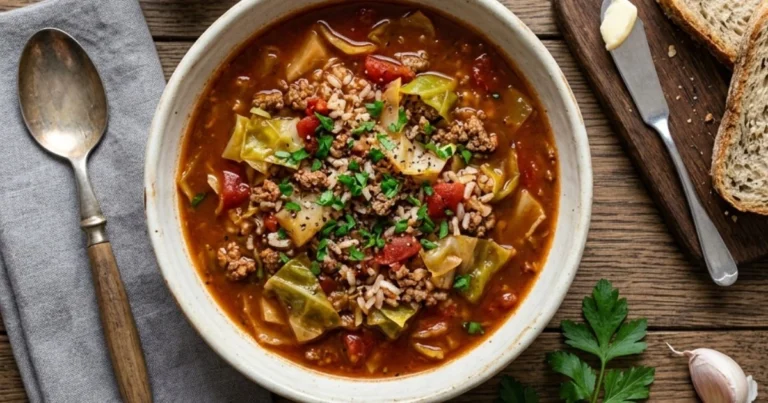
Recipe 10: Cabbage Roll Soup (Lazy Cabbage Rolls)
Your Ingredients
Your soup base:
- 500g (1 lb) beef mince
- 5 cups green cabbage, chopped
- 1 cup white rice, uncooked
- 1 can (800g/28 oz) crushed tomatoes
- 1 can (400g/14 oz) tomato sauce
- 6 cups beef stock
- 1 medium onion, diced
- 3 cloves garlic, minced
Your seasonings:
- 2 tablespoons brown sugar
- 2 tablespoons lemon juice or red wine vinegar
- 1 tablespoon Worcestershire sauce
- 1 teaspoon dried dill
- 1 teaspoon paprika
- Salt and pepper to taste
- 2 bay leaves
For your serving:
- Sour cream
- Fresh dill or parsley
Your Instructions
- Brown your beef (5 minutes): In a large soup pot or Dutch oven, cook your beef mince over medium-high heat until browned. Break into small pieces. Drain excess fat if needed.
- Sauté your aromatics (3 minutes): Add onion to the pot and cook until softened. Add garlic and cook for 30 seconds.
- Add your liquids and seasonings (2 minutes): Pour in beef stock, crushed tomatoes, tomato sauce, brown sugar, lemon juice, Worcestershire sauce, and all spices. Stir well to combine.
- Add your cabbage and rice (1 minute): Stir in your chopped cabbage and uncooked rice. The cabbage will seem like too much—it will cook down significantly.
- Simmer (25-30 minutes): Bring to a boil, then reduce heat to medium-low. Simmer uncovered, stirring occasionally, until your rice is tender and cabbage is soft. Add more stock if your soup becomes too thick.
- Adjust your seasoning: Taste and add more salt, pepper, or lemon juice as needed. The balance of sweet and tangy is key. Remove bay leaves.
- Serve: Ladle into bowls and top with a dollop of sour cream and fresh herbs.
Why This Works for You
Traditional cabbage rolls take 2+ hours to make—this soup delivers identical flavors in 40 minutes total. The sweet-sour profile from brown sugar and lemon juice is characteristic of authentic Eastern European cabbage rolls. Cooking rice directly in your soup allows it to absorb the tomato-beef broth, creating cohesive flavor throughout.
This recipe is inspired by Polish golabki and Russian golubtsy, both of which feature the signature sweet-tangy tomato sauce.
Your Tips and Variations
Rice substitute: Use cauliflower rice added in the last 5 minutes for a low-carb version.
Instant Pot method: Use sauté function for steps 1-3, then pressure cook on high for 8 minutes with natural release.
Freezer-friendly: Freeze for up to 3 months. Your rice may absorb liquid during freezing—add stock when reheating.
Heartier version: Add diced potatoes or white beans in the last 15 minutes.
Traditional touch: Some recipes add raisins (2 tablespoons) for authentic sweetness—add with your cabbage.
How to Store and Reheat Your Beef Mince and Cabbage Recipes
Your Refrigeration Guidelines
For short-term storage (3-4 days):
- Cool your food to room temperature within 2 hours of cooking USDA food safety guideline
- Transfer to airtight containers
- Label with date
- Store in your refrigerator at or below 4°C (40°F)
Glass containers with tight-sealing lids preserve flavor better than plastic and won’t absorb odors.
Freezing for Your Long-Term Storage
Your freezer-friendly recipes (up to 3 months):
- Unstuffed cabbage casserole
- Beef and cabbage soup
- Cabbage roll soup
- Beef and cabbage stew
Recipes that don’t freeze well:
- Stir-fries (cabbage becomes watery upon thawing)
- Egg roll in a bowl (texture degrades)
- Hash (potatoes become grainy)
Your proper freezing technique:
- Cool completely before freezing
- Portion into meal-sized containers
- Leave 1 inch headspace for expansion
- Remove as much air as possible
- Label with contents and date
- Freeze flat for easier storage
Your Reheating Methods That Preserve Quality
Stovetop (best for maintaining texture):
- Add 2-3 tablespoons water or stock to your pan
- Heat over medium, stirring occasionally
- Reheat to 74°C (165°F) internal temperature
Microwave (fastest method):
- Place in microwave-safe dish
- Add 1-2 tablespoons liquid
- Cover with damp paper towel
- Heat in 90-second intervals, stirring between
- Check that center reaches 74°C (165°F)
Oven (best for casseroles):
- Preheat to 180°C (350°F)
- Cover with foil to prevent drying
- Heat for 20-25 minutes until warmed through
- Remove foil for last 5 minutes to crisp top
Adding liquid matters because cabbage releases moisture during initial cooking. Reheating evaporates this moisture, making your dishes dry, adding liquid compensates for this loss.
Common Mistakes You Should Avoid When Cooking Beef Mince and Cabbage
Mistake #1: Overcrowding Your Pan
Your problem: Adding too much beef or cabbage at once lowers your pan temperature, causing ingredients to steam instead of brown.
Your solution:
- Use a pan large enough for ingredients to spread in a single layer
- Cook your beef in batches if necessary
- For cabbage, add in stages as it wilts down
This matters because browning creates the Maillard reaction, complex flavor compounds that form only at high temperatures above 140°C (285°F). Steaming doesn’t reach these temperatures.
Learn more about proper browning techniques from Serious Eats, a trusted culinary resource.
Mistake #2: Not Seasoning in Layers
Your problem: Adding all seasoning at the end results in one-dimensional flavor.
Your solution:
- Season your beef while browning
- Add aromatics (garlic, ginger) at the right time, they burn easily
- Taste and adjust at the end
Each ingredient needs individual seasoning to build depth. Salt also helps your vegetables release moisture at the right pace.
Mistake #3: Cooking Your Cabbage Too Long
Your problem: Overcooked cabbage becomes mushy and develops an unpleasant sulfurous smell.
Your solution:
- For stir-fries: Cook 4-6 minutes maximum
- For soups/stews: Add in the last 20-30 minutes
- Cook until just tender with a slight bite
Overcooking releases glucosinolates, sulfur-containing compounds that create that distinctive “boiled cabbage” smell. Proper timing minimizes this.
Mistake #4: Using the Wrong Fat Content in Your Beef
Your problem: Too lean (90/10 or higher) produces dry, crumbly results. Too fatty (70/30) creates greasy dishes.
Your solution: Stick with 80/20 or 85/15 for optimal moisture and flavor without excess grease.
Mistake #5: Skipping Your Browning Step
Your problem: Adding raw beef directly to soups or slow cookers results in gray, bland meat.
Your solution: Always brown your beef first, even for slow-cooked dishes. It only takes 5 minutes and dramatically improves flavor.
Browning creates hundreds of flavor compounds through caramelization. Boiled meat never develops these.
Your Nutritional Information and Health Benefits
Your Macronutrient Breakdown (Per Serving, Average Across Recipes)
Your typical serving (based on 4 servings per recipe):
- Calories: 300-400 kcal
- Protein: 22-28g
- Carbohydrates: 15-25g (varies significantly if rice or potatoes are included)
- Fat: 15-20g
- Fiber: 4-6g
Your Key Nutrients in Beef Mince and Cabbage
From your beef mince (80/20 lean):
- Iron: 2.5mg per 100g (14% daily value) – crucial for oxygen transport
- Vitamin B12: 2.4mcg per 100g (100% daily value) – supports nerve function
- Zinc: 5.3mg per 100g (48% daily value) – immune system support
- Complete protein: Contains all essential amino acids
From your cabbage:
- Vitamin C: 36.6mg per cup (41% daily value) – antioxidant and immune support
- Vitamin K: 68mcg per cup (57% daily value) – blood clotting and bone health
- Folate: 38mcg per cup (10% daily value) – cell growth and DNA synthesis
- Fiber: 2.2g per cup – digestive health
Source: USDA FoodData Central
Your Health Benefits Supported by Research
Weight management: The high protein-to-calorie ratio increases your satiety. A 2015 study in the American Journal of Clinical Nutrition found that high-protein meals reduced subsequent calorie intake by 12%.
Digestive health: Cabbage contains glucosinolates and fiber that support your gut health. Research in the Journal of Agricultural and Food Chemistry (2018) demonstrated cabbage’s prebiotic properties.
Anti-inflammatory properties: Cabbage contains anthocyanins (especially red cabbage) and other antioxidants. A 2014 review in Food Chemistry identified significant anti-inflammatory compounds.
Making Your Recipes Healthier
To reduce your calories:
- Use 90/10 lean beef (saves ~50 calories per serving)
- Drain and rinse your cooked beef to remove up to 50% of fat
- Increase your cabbage ratio, decrease beef ratio
To increase your nutrients:
- Add extra vegetables (carrots, bell peppers, mushrooms)
- Use red cabbage for added antioxidants
- Top with fresh herbs for additional micronutrients
For your specific dietary needs:
- Low-carb/Keto: Omit rice and potatoes; focus on recipes 1, 3, 9
- Low-sodium: Use no-salt-added stock and reduced-sodium soy sauce
- Gluten-free: All recipes are naturally gluten-free except those using soy sauce—substitute tamari
Start Cooking Your Beef Mince and Cabbage Recipes Tonight
You now have 10 tested, reliable beef mince and cabbage recipes that deliver on three critical factors: cost (averaging $1.50-2.25 per serving), nutrition (22-28g protein plus significant fiber and vitamins), and versatility (from Asian stir-fries to European comfort food).
Your best starting point if you’re new to cooking beef and cabbage together is Recipe 1 (Classic One-Pan Stir-Fry) or Recipe 4 (Hearty Soup). Both are forgiving and build fundamental techniques you’ll use across all other recipes.
For your meal planning needs, these recipes reheat beautifully, making them ideal for Sunday batch cooking. Your casseroles, soups, and stews actually improve after a day in the refrigerator as flavors meld.
Remember that cooking is a skill that improves with repetition. Each time you make these recipes, you’ll develop better intuition for timing, seasoning, and texture. Trust the process, follow the instructions, and you’ll have a reliable dinner solution that works for your schedule and budget.
Your next step is simple: Choose one recipe that appeals to you, gather your ingredients, and cook it this week. You’ll be surprised how quickly these beef mince and cabbage recipes become staples in your weeknight rotation. The combination of affordability, nutrition, and ease makes them virtually unbeatable for busy households.
Start with what you have in your kitchen right now, chances are you already have most of the ingredients. Pick up some beef mince and a head of cabbage on your next grocery run, and you’re ready to go. Your family will thank you for the delicious, satisfying meals, and your wallet will thank you for the savings.
More Easy Weeknight Recipes You’ll Love
Love these quick dinner ideas? Expand your weeknight recipe collection with our Easy Cabbage Recipe and sautéed cabbage with eggs for more ways to use this versatile vegetable. Our Easy Cabbage Soup Recipe (Ready in 30 Minutes) is another family favorite, along with our copycat Olive Garden chicken gnocchi soup recipe for cozy comfort food. For another protein-packed stir-fry, try our Easy Beef and Broccoli Recipe in 6 easy steps, it’s just as quick and delicious as the recipes you’ve learned here.
2 Comments
Comments are closed.