
Corned Beef Cabbage In Slow Cooker Recipe
Slow Cooker Corned Beef and Cabbage Recipe: Classic + 5 Flavor Variations That Actually Work
If you’ve ever ended up with tough, salty, or waterlogged corned beef, you already know that cooking method matters more than most recipes admit. The slow cooker changes everything. Low, steady heat breaks down the brisket’s tough connective tissue over hours, turning what could be a chewy disappointment into something genuinely fork-tender and full of flavor, and it does it without you standing over a stove.
This guide gives you a tested, reliable corned beef cabbage in slow cooker recipe that works every single time, whether you’re cooking for St. Patrick’s Day or a no-fuss Sunday dinner. You’ll also get five flavor variations so you can move well beyond the classic and make this dish your own. From the spice packet to the cabbage timing, every step here has a reason, and you’ll know exactly what that reason is.
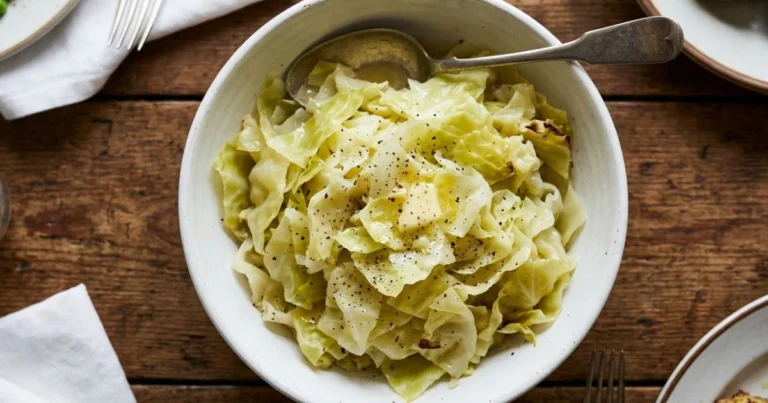
If you’re already a fan of simple cabbage dishes, check out this Easy Cabbage Recipe to see just how versatile this vegetable really is.
Why the Slow Cooker Is the Best Way to Make Corned Beef and Cabbage
Overcooked or undercooked corned beef almost always comes down to one thing, cooking it too fast over too high a heat. The stovetop boiling method takes just 3–4 hours, but that rapid cooking process gives you significantly less control over the final texture and moisture of your brisket. The oven takes roughly the same time and ties up your kitchen. The slow cooker, by contrast, asks almost nothing of you and gives back consistently superior results.
Here’s why it works so well. Corned beef brisket is a tough, heavily worked muscle cut loaded with collagen. When that collagen is exposed to moist heat at around 190–205°F over an extended period, it converts to gelatin, and that gelatin is what gives you that silky, melt-apart texture you’re chasing. Rushing that process with high heat tightens the muscle fibers before the collagen has time to break down, leaving you with a brisket that’s cooked through but still chewy.
The slow cooker also holds moisture better than any other method. Your vegetables cook in a bath of seasoned broth that deepens in flavor hour by hour, and the fat cap on top of your brisket continuously bastes the meat as it renders.
According to the USDA, the safe minimum internal temperature for beef brisket is 145°F, but for corned beef to reach true fork-tenderness, you’re aiming for 190–205°F, a target that’s only consistently achievable through low, slow cooking. USDA Safe Minimum Internal Temperature Chart
Cooking Methods & Tenderness Comparison:
- Stovetop Boil — 3–4 hours | Tenderness: Good
- Oven Braise — 3.5 hours | Tenderness: Good
- Slow Cooker (High) — 4–5 hours | Tenderness: Very Good
- Slow Cooker (Low) — 8–10 hours | Tenderness: Excellent
Ingredients for Slow Cooker Corned Beef and Cabbage (Classic Recipe)
Getting your ingredients right before you start is what separates a confident cook from a frustrated one. Here’s exactly what you need and why each item earns its place in the pot.
The Brisket
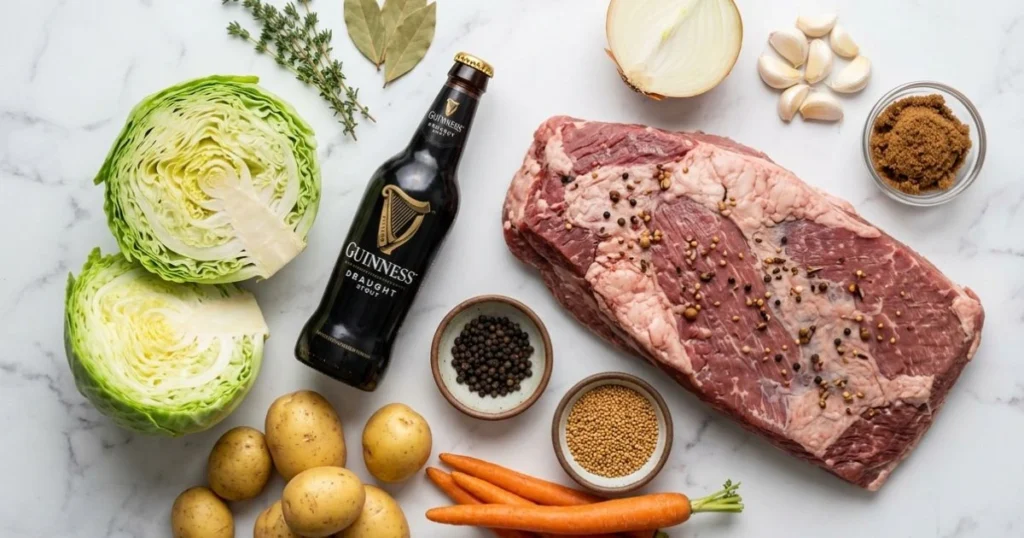
- 3–4 lb flat-cut corned beef brisket (with included spice packet)
- Always choose flat-cut over point-cut. The flat cut has uniform thickness, which means it cooks evenly from edge to edge. The point cut has more marbling and is flavorful, but it’s uneven and harder to slice cleanly.
- Rinse your brisket under cold water before cooking. Pre-brined corned beef is packed with sodium. A quick rinse removes surface brine and prevents your finished dish from being overwhelmingly salty.
The Vegetables
- 1 small head green cabbage, cut into 6–8 wedges
- 4 medium Yukon Gold potatoes, quartered
- 3 large carrots, peeled and cut into 2-inch chunks, thick enough to hold their shape through the full cook time
- 1 medium yellow onion, roughly chopped
- 4 garlic cloves, smashed
Why Yukon Golds? Yukon Gold potatoes are the smart choice for slow cooker recipes precisely because they maintain their structure throughout extended cooking times, something russet potatoes consistently fail to do, often turning soft and mushy long before your brisket is ready. Carrots add a subtle sweetness that balances the salt of the brisket. Onion and garlic form the aromatic base that the broth builds on over those 8–10 hours.
Exploring other ways to use cabbage in hearty meals? The Beef Mince and Cabbage Recipes collection is worth bookmarking for your weeknight rotation.
The Cooking Liquid and Seasonings
- 3 cups low-sodium beef broth
- 1 cup stout beer (Guinness is the classic choice) or water
- Included spice packet (or DIY blend: mustard seeds, coriander seeds, bay leaves, black peppercorns, allspice berries)
- 1 tbsp brown sugar
- 1 tsp Worcestershire sauce
The brown sugar isn’t there to make your dish sweet, it’s there to round off the sharp saltiness of the brine. The Worcestershire adds umami depth that plain broth alone can’t provide. If you want to go the DIY spice route, McCormick’s Guide to Pickling Spices gives you a solid reference for ratios.
How to Make Corned Beef and Cabbage in the Slow Cooker, Step-by-Step
Equipment You’ll Need
- 6-quart or larger slow cooker (non-negotiable for a 3–4 lb brisket, anything smaller and you risk uneven cooking)
- Sharp chef’s knife and sturdy cutting board
- Instant-read meat thermometer
- Tongs and a slotted spoon for serving
Step 1 — Prep the Brisket (5 Minutes)
Remove your brisket from its packaging and rinse it thoroughly under cold running water. Pat it dry with paper towels. If you have an extra five minutes, score the fat cap lightly in a crosshatch pattern, this helps the seasoning penetrate and encourages more even rendering during cooking.
Optional but recommended: Sear the brisket in a hot, lightly oiled skillet for 2–3 minutes per side before adding it to the slow cooker. This step develops a layer of caramelized crust through the Maillard reaction, adding flavor complexity that slow cooking alone can’t create. It’s not required, but if you have the time, it’s worth it.
Step 2 — Layer the Slow Cooker (5 Minutes)
Layer order matters more than most recipes acknowledge. Here’s the correct sequence:
- Spread your chopped onion and smashed garlic across the bottom of the slow cooker. These create a natural rack that keeps the brisket off direct heat and flavors everything from below.
- Place the rinsed brisket fat-side up on top of the onion bed.
- Arrange your potatoes and carrots around the sides of the brisket.
- Pour the beef broth and stout beer over everything.
- Scatter the spice packet evenly across the top of the brisket.
- Add your brown sugar and Worcestershire sauce to the liquid.
Fat-side up is important. As the fat cap renders, it continuously bastes the meat below it. Flip it fat-side down and you lose that self-basting effect entirely.
Step 3 — Set and Cook
- Low setting: 8–10 hours (strongly recommended)
- *High setting: 4–5 hours (acceptable, but lower tenderness)
Set it and genuinely leave it alone. Every time you lift that lid, you release steam and drop the internal temperature, adding 20–30 minutes to your cook time. Resist the urge.
A fully loaded 6-quart slow cooker on the low setting holds a fairly consistent temperature between 170–200°F, right in the sweet spot for collagen breakdown without boiling the liquid aggressively.
Step 4 — Add the Cabbage in the Final 1–2 Hours
This is the step most recipes get wrong, and it’s the reason so many people end up with a pot of grey, waterlogged cabbage. Do not add your cabbage at the beginning.
Cabbage is a tender, fast-cooking brassica. In a slow cooker environment over 8 hours, it will completely dissolve into the broth. That’s not what you want. Add your cabbage wedges in the last 1.5–2 hours of cooking, tucking them around the brisket so they’re partially submerged in the cooking liquid.
The result: tender, flavorful cabbage wedges that still have a little structure and a bright, satisfying bite.
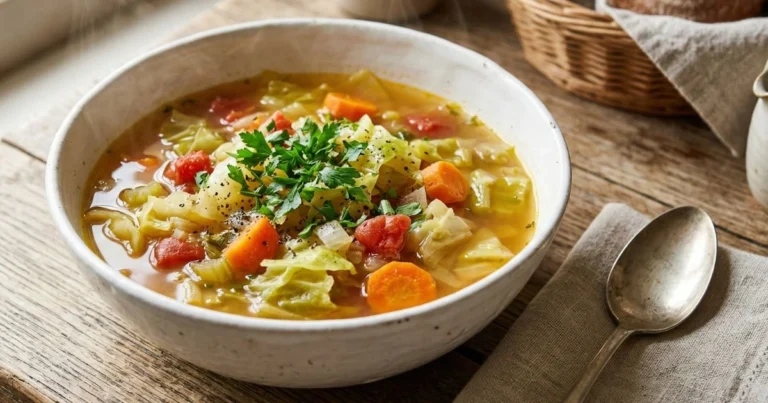
If you love working with cabbage in simple, fast recipes, this Easy Cabbage Soup Recipe is a great companion dish that comes together in 30 minutes.
Step 5 — Rest, Slice, and Serve
When your cook time is up and the brisket reads at least 190°F on an instant-read thermometer:
- Carefully remove the brisket to a cutting board.
- Tent it loosely with aluminum foil and let it rest for 10–15 minutes. This is mandatory, it allows the internal juices to redistribute. Cut into it immediately and those juices run straight onto your board instead of staying in the meat.
- Locate the grain of the brisket, the direction the muscle fibers run. Slice perpendicular to the grain, not parallel. Slicing against the grain shortens the muscle fibers and makes every bite dramatically more tender.
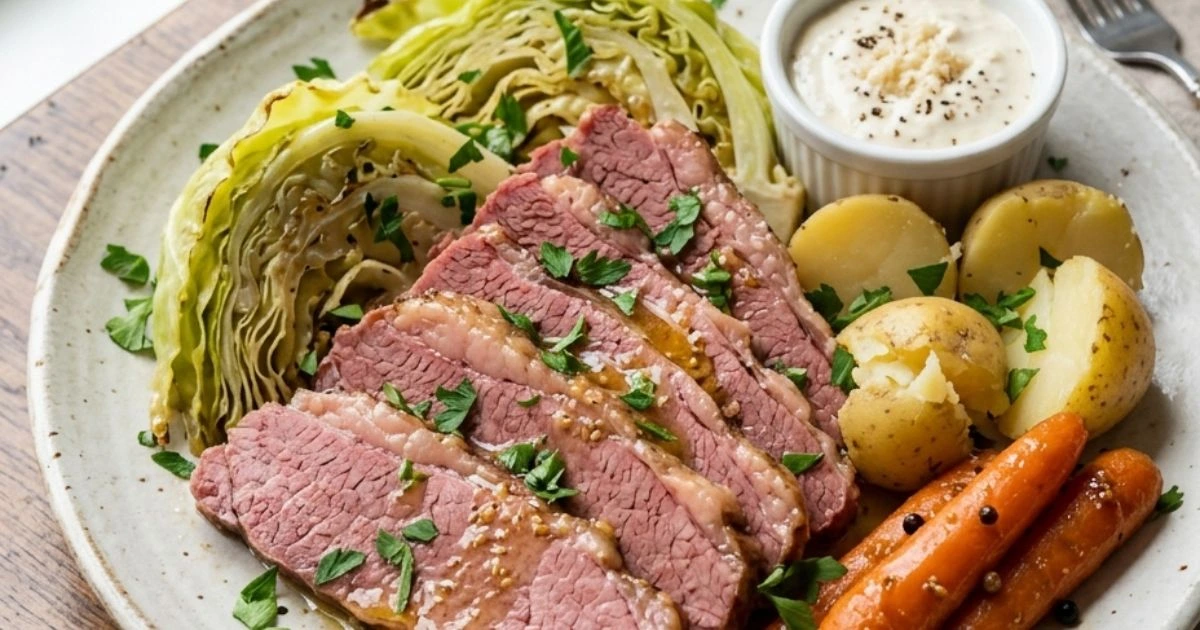
- Arrange your sliced brisket on a serving platter, surrounded by your potatoes, carrots, and cabbage wedges.
- Ladle some of the cooking liquid over the top and finish with fresh flat-leaf parsley.
Serve with whole-grain mustard and prepared horseradish on the side.
Pro Tips for the Best Slow Cooker Corned Beef and Cabbage
Common Mistakes to Avoid
- Skipping the rinse: Surface brine makes the finished dish aggressively salty. A 60-second rinse solves this completely.
- Adding cabbage at the start: You’ll end up with an unappetizing mush. Wait until the final 1.5–2 hours.
- Cooking entirely on high: High heat won’t ruin your brisket, but it will give you a noticeably less tender result than the low setting over 8–10 hours.
- Slicing with the grain: This single mistake is responsible for more “tough corned beef” complaints than any other factor. Always identify the grain direction and cut across it.
Make-Ahead and Storage Tips
Your slow cooker corned beef actually tastes better the next day, the flavors continue to develop overnight and the meat becomes even easier to slice when cold.
- Refrigerator: Store meat, vegetables, and cooking liquid separately in airtight containers for up to 4 days.
- Freezer: Freeze the sliced brisket and cooking liquid (separately from vegetables) for up to 3 months. Vegetables don’t freeze well after cooking, they turn to mush upon reheating.
- Reheating: Reheat sliced brisket in a covered skillet with a generous splash of the reserved cooking liquid over medium-low heat. This prevents drying out.
Got leftovers? Don’t let them go to waste. Transform your leftover brisket into a satisfying morning meal with this Corned Beef Hash Recipe Guide , one of the best uses for day-old corned beef you’ll find.
5 Flavor Variations of Slow Cooker Corned Beef and Cabbage
The classic recipe above is your reliable foundation. These five variations let you adapt it to different occasions, flavor preferences, and the ingredients you already have on hand.
Variation 1 — Classic Irish-American (The Original)
Stick with the base recipe exactly as written: stout beer, traditional spice packet, Yukon Gold potatoes, and green cabbage. Serve alongside warm Irish soda bread to soak up the cooking liquid, and set out a generous bowl of softened butter.
This version is the benchmark, it’s what most people picture when they think of this dish, and it delivers exactly what it promises: deep, savory, satisfying simplicity.
If you enjoy building meals around hearty greens, the 10 Healthy Napa Cabbage Recipes collection gives you plenty of creative ideas beyond the classic green cabbage.
Variation 2 — Honey Mustard Glazed
What changes:
- Add 2 tbsp Dijon mustard + 2 tbsp honey directly to the cooking liquid at the start
- In the final 30 minutes, remove the lid, brush a concentrated glaze (equal parts Dijon and honey) directly onto the brisket, and switch the slow cooker to high
Result: A caramelized, tangy-sweet crust forms on the surface of the brisket while the interior stays just as tender. This variation works especially well if you’re serving guests who aren’t traditional corned beef fans, the honey mustard profile is more universally approachable.
Variation 3 — Spicy Cajun-Style
What changes:
- Replace the spice packet with 2 tbsp Cajun seasoning blend
- Add 12 oz sliced andouille sausage to the pot alongside the brisket
- Swap Yukon Golds for red potatoes and add 1 sliced bell pepper (any color)
- Use chicken broth instead of beef broth for a lighter base
Result: Bold, smoky heat cuts through the richness of the brisket. The andouille brings its own paprika-forward spice and transforms the cooking liquid into something closer to a Cajun braise. For more on authentic Louisiana flavor profiles, Louisiana Travel’s Culinary Guide is a solid reference.
Variation 4 — Asian-Inspired Soy-Ginger
What changes:
- Replace beef broth with a 50/50 mix of low-sodium soy sauce and chicken broth
- Add 1 tbsp freshly grated ginger, 2 tbsp rice vinegar, and 1 tsp sesame oil to the liquid
- Swap green cabbage for Napa cabbage (added in the final 90 minutes)
- Serve over steamed jasmine rice instead of with bread
Result: The brisket takes on a deeply savory, slightly tangy character with a clean finish that’s completely different from the classic preparation. The Napa cabbage is more delicate than green cabbage and holds up beautifully in the final stretch of cooking. If you enjoy simple egg and cabbage combinations as a side, this Sautéed Cabbage with Eggs recipe pairs perfectly with this variation.
Variation 5 — Garlic Herb and White Wine
What changes:
- Replace the stout beer with 1 cup dry white wine (Sauvignon Blanc or Pinot Grigio work well)
- Add 6–8 whole garlic cloves, 4 fresh thyme sprigs, and 2 fresh rosemary sprigs
- Finish the dish with a squeeze of fresh lemon juice just before serving
Result: Lighter, more aromatic, and genuinely elegant. The white wine cuts through the brininess of the brisket and gives the cooking liquid a bright, herbaceous quality. This variation is polished enough for a dinner party but still as hands-off as the original. Pair it with crusty sourdough and a dry Riesling.
What to Serve With Slow Cooker Corned Beef and Cabbage
The dish is a complete meal on its own, but the right accompaniments elevate it further:
- Irish soda bread, the ideal vehicle for soaking up cooking liquid
- Whole-grain or stone-ground mustard, serves as both condiment and sauce
- Creamy horseradish sauce, a classic pairing that cuts through the richness
- Pickled beets, adds brightness and acidity to balance the savory depth
- Cold Guinness or a dry Riesling, both complement the dish beautifully from different flavor angles
If you’re building out a full dinner menu and want another dependable beef recipe to rotate in, this Easy Beef and Broccoli Recipe in 6 Easy Steps is a consistent crowd-pleaser that comes together just as reliably.
Nutritional Information (Per Serving, Classic Recipe, Serves 6)
- Calories — ~420 kcal
- Protein — 32g
- Total Fat — 18g
- Carbohydrates — 28g
- Sodium — ~1,150mg
- Dietary Fiber — 4g
Values are estimates based on a 4 lb flat-cut brisket serving 6. For verified nutritional data, reference the USDA FoodData Central database.
Conclusion
You now have everything you need to make a genuinely excellent corned beef and cabbage in the slow cooker, not just a passable one, but the kind that makes people ask for the recipe. The method is straightforward, the steps are deliberate, and every choice here from the fat-cap placement to the cabbage timing has a specific reason behind it.
Whether you go classic Irish-American, explore the honey mustard glaze, or take it in a completely different direction with the soy-ginger variation, the foundation remains the same: a rinsed flat-cut brisket, a well-layered slow cooker, and enough patience to let low heat do what it does best.
Your next step is simple: add a brisket to your shopping list, pick your variation, and let the slow cooker handle the rest. And when you’ve got leftovers the next day, and you will, don’t miss the Corned Beef Hash Recipe Guide for one of the most satisfying ways to use them.
Frequently Asked Questions About Corned Beef Cabbage in Slow Cooker Recipes
How long does corned beef cabbage in a slow cooker take to cook?
On the low setting, plan for 8–10 hours. On high, 4–5 hours. In both cases, add your cabbage wedges only in the final 1.5–2 hours to prevent overcooking.
Do I need to add liquid to my corned beef cabbage slow cooker recipe?
Yes, always. Use a minimum of 3 cups beef broth plus 1 cup of water or stout beer. The brisket releases its own juices during cooking, but you need that initial liquid base to prevent scorching and create the flavorful cooking liquid that serves as your sauce.
Can You Cook Corned Beef Cabbage in a Slow Cooker Overnight on Low?
Absolutely. Set your slow cooker to LOW before bed, 8–10 hours is the ideal range. Add your cabbage wedges in the morning, roughly 1.5–2 hours before you plan to serve. This is one of the most practical applications of this recipe if you’re feeding a crowd for lunch or an early dinner.
Why Is My Corned Beef Cabbage in the Slow Cooker Tough and Chewy?
The most likely culprits are cooking on HIGH for too long, which tightens the muscle fibers, or slicing the brisket with the grain instead of against it. Always use the LOW setting for the full 8–10 hours, and before you slice, take a moment to identify the direction the muscle fibers run, then cut perpendicular to them.
Can I use a frozen corned beef brisket in this slow cooker recipe?
This is not recommended. Starting from frozen creates uneven cooking, the exterior reaches a safe temperature while the interior lags behind, creating food safety concerns. Always thaw your brisket fully in the refrigerator for 24–48 hours before cooking. The USDA’s Freezing and Food Safety Guidelines cover safe thawing methods in detail.
What can I do with leftover slow cooker corned beef and cabbage?
Your leftovers are genuinely valuable, don’t underestimate them. Here’s what works well:
- Corned beef hash → See the Corned Beef Hash Recipe Guide
- Classic Reuben sandwiches → Thin-sliced brisket, Swiss cheese, sauerkraut, Thousand Island on rye
- Hearty cabbage soup → Use the cooking liquid as your base → Easy Cabbage Soup Recipe
- Breakfast scramble → Dice leftover brisket and cabbage, cook with eggs → Sautéed Cabbage with Eggs
One Comment
Comments are closed.