Cabbage Roll Soup Recipe
Cabbage Roll Soup Recipe: Everything You Love About Stuffed Cabbage Rolls in One Easy Pot
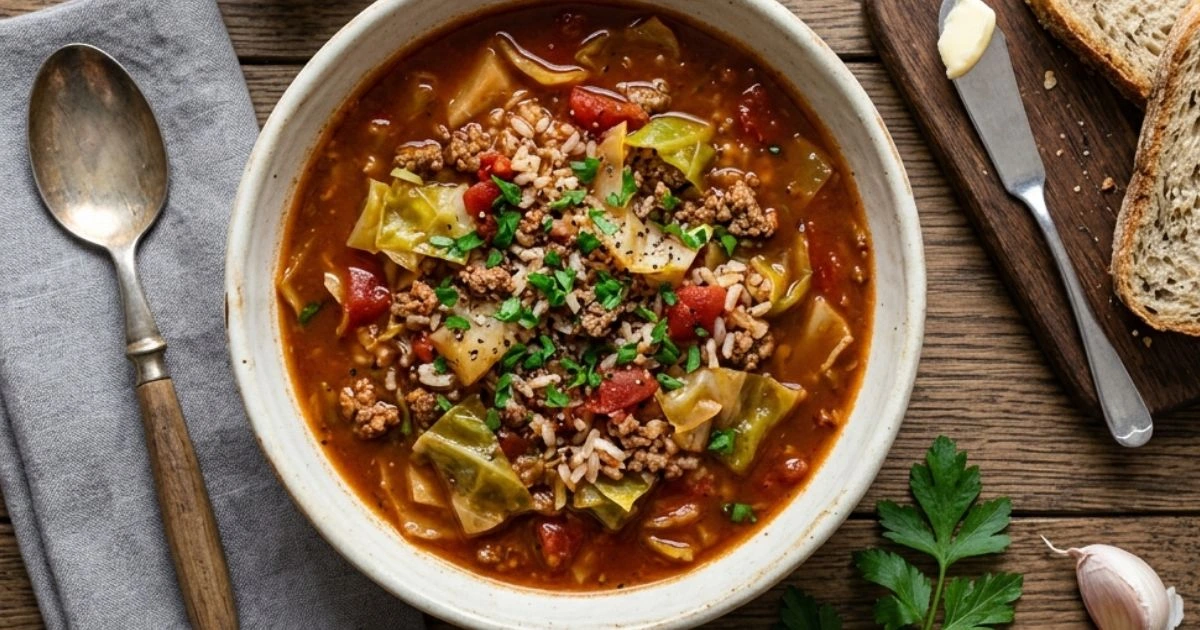

Cabbage Roll Soup Recipe
Ingredients
Method
- Brown the beef
- Heat olive oil in a large pot over medium-high heat. Add ground beef, break apart, and cook until browned. Drain excess fat.
- auté aromatics
- Add diced onion and cook 3 minutes until softened. Add minced garlic and cook 60 seconds more.
- Build the broth
- Add diced tomatoes, tomato sauce, beef broth, water, Worcestershire sauce, and seasonings. Bring to a boil.
- Add rice
- Stir in uncooked rice. Reduce to a simmer and cook uncovered for 15 minutes.
- Add cabbage
- Stir in chopped cabbage. Simmer 10–12 minutes until cabbage is tender. Taste and adjust seasoning.
- Serve
- Ladle into bowls and top with sour cream, fresh parsley, or parmesan. Serve with crusty bread.
If you’ve ever wanted the deep, satisfying flavors of traditional stuffed cabbage rolls without spending two hours in the kitchen, you’re in exactly the right place. This cabbage roll soup recipe delivers every bit of that cozy, hearty comfort you’re looking for, the savory ground beef, tender cabbage, perfectly seasoned tomato broth, and fluffy rice, all in a single pot that comes together in under an hour. You don’t need to roll anything. You don’t need any special skills. And you can trust that this recipe will work the first time and every time after that.
Whether you’re feeding a hungry family on a Tuesday night, prepping meals for the week ahead, or just craving something warm and deeply satisfying, this deconstructed cabbage roll soup is the answer. By the time you finish reading, you’ll know exactly what to buy, how to build the flavors step by step, and how to make this soup your own.
Why You’ll Love This Cabbage Roll Soup Recipe
All the Flavor, None of the Fuss
Traditional stuffed cabbage rolls are absolutely delicious, but they’re also a labor of love. You blanch the cabbage leaves, carefully mix and season the filling, roll each one individually, and then bake everything in sauce for the better part of an afternoon. It’s a dish worth making on a special occasion, but it’s not exactly weeknight-friendly.
This soup version takes every element that makes stuffed cabbage rolls so irresistible and throws them into one pot together. The flavors meld together in the same way, actually better in some ways, because everything simmers together, and the beef, cabbage, tomatoes, and rice all exchange flavor as they cook. You get the same soul-satisfying result in a fraction of the time, with far less cleanup.
When to Make It
This is the kind of meal that earns a permanent spot in your weekly rotation. It’s perfect on cold evenings when you need something warming and substantial. It’s ideal for meal prep because it reheats beautifully and the flavor actually improves overnight as the ingredients continue to meld. It doubles and freezes without any issues, making it one of the most practical recipes you can have in your arsenal. And because every ingredient is either a pantry staple or something you can grab at any grocery store without spending much money, it’s also one of the most budget-friendly dinners you can make.
What Is Cabbage Roll Soup?
The Deconstructed Cabbage Roll Explained
Stuffed cabbage rolls, known as gołąbki in Polish, holubtsi in Ukrainian, and sarma across much of Eastern Europe and the Middle East, have been a cornerstone of comfort cooking for centuries. The concept is simple: seasoned ground meat and rice wrapped in softened cabbage leaves and cooked in a savory tomato sauce. According to food historians, variations of this dish appear across dozens of cultures, each adding their own regional spin.
Cabbage roll soup takes that same beloved concept and deconstructs it. Instead of rolling the ingredients inside individual cabbage leaves, you chop the cabbage and add it directly to the pot along with the browned beef, rice, and tomato-based broth. The result is a thick, hearty soup that tastes remarkably like the original, perhaps even more so, because the flavors are free to mingle throughout the entire pot rather than being contained inside individual rolls.
For more cabbage-based comfort food inspiration, check out this Easy Cabbage Soup Recipe that’s ready in just 30 minutes.
Ingredients for Cabbage Roll Soup
The Core Ingredients You Need
This recipe makes 6 generous servings. Here’s everything you’ll need before you start cooking:
For the soup:
- 1 lb ground beef (80/20 blend recommended for best flavor)
- 1 medium yellow onion, diced
- 3 garlic cloves, minced
- 1 small head green cabbage, roughly chopped (approximately 6 cups)
- 1 can (14.5 oz) diced tomatoes, with juices
- 1 can (15 oz) tomato sauce
- 4 cups beef broth (low sodium preferred so you control the salt)
- 1 cup water
- ¾ cup uncooked long-grain white rice
- 2 tablespoons Worcestershire sauce
- 1 teaspoon smoked paprika
- 1 teaspoon Italian seasoning
- Salt and black pepper to taste
- 1 tablespoon olive oil
For serving (optional but highly recommended):
- Sour cream
- Fresh flat-leaf parsley, chopped
- Grated parmesan
- Crusty bread
Optional Add-ins and Substitutions
You have real flexibility with this recipe. Ground turkey, ground pork, or even a beef-pork mixture all work beautifully in place of straight ground beef. If you prefer brown rice, it works, just add it earlier and expect a slightly longer cook time, around 35–40 minutes rather than 20. For a low-carb version, cauliflower rice is an excellent substitute; stir it in during the last 5 minutes of cooking so it doesn’t turn mushy. A parmesan rind added to the simmering broth adds remarkable depth, just remove it before serving. If you want extra vegetables, diced carrots and celery make excellent additions alongside the onion.
According to the USDA FoodData Central database, ground beef (80/20) provides approximately 20 grams of protein per 3-ounce serving, making this soup a genuinely protein-rich meal.
Why Each Ingredient Matters
Ground beef is the foundation of the whole dish. The fat content in 80/20 ground beef provides flavor that leaner blends simply can’t replicate, and since you’re draining the excess fat after browning, you’re keeping the richness without making the soup greasy. Cabbage is the heart of this recipe; green cabbage has just the right structure to hold up through simmering without dissolving entirely, giving you pieces with genuine texture in every bite.
Rice is what transforms this from a straightforward beef and cabbage soup into something that really mimics stuffed cabbage rolls, it thickens the broth, adds body, and absorbs all that savory tomato-beef flavor. And using both diced tomatoes and tomato sauce creates the layered sweet-tangy-savory broth that defines the whole dish.
Equipment You’ll Need
You don’t need specialized equipment for this recipe, but a few key tools make the process smoother. A large Dutch oven or heavy-bottomed pot, 6 quarts minimum, is the ideal vessel because its thick base distributes heat evenly and prevents scorching. A wooden spoon or silicone spatula gives you good control when breaking up the beef. A sharp chef’s knife makes the cabbage-chopping step quick and easy. If you’re investing in kitchen equipment, Serious Eats has a thorough guide to the best Dutch ovens that’s worth checking out.
How to Make Cabbage Roll Soup — Step-by-Step Instructions
Step 1: Brown the Ground Beef (5–7 minutes)
Heat one tablespoon of olive oil in your large pot over medium-high heat. Once it’s hot and shimmering, add the ground beef. Break it apart with your wooden spoon into small crumbles as it cooks. You want to cook it until there’s absolutely no pink remaining and you see some nice browning on the meat, that browning is the Maillard reaction at work, creating hundreds of flavor compounds that will define the depth of your soup. Don’t rush this step. Once browned, carefully drain the excess fat, leaving just a small amount in the pot for flavor.
Step 2: Sauté the Aromatics (3–4 minutes)
Reduce the heat to medium and add your diced onion directly to the beef. Stir everything together and cook for about 3 minutes, until the onion becomes soft and translucent. Then add your minced garlic and cook for exactly 60 seconds, stirring constantly. This timing matters more than you might think: undercooked garlic has a sharp, raw bite, while overcooked garlic turns bitter. Sixty seconds in the residual heat of the pot hits the sweet spot every time.
Step 3: Build the Broth (2 minutes)
Add the diced tomatoes with all their juices, the tomato sauce, beef broth, and water directly to the pot. Stir everything together well. Add the Worcestershire sauce, smoked paprika, Italian seasoning, and a generous pinch of salt and pepper. Give everything a thorough stir to combine. Raise the heat to medium-high and bring it to a light boil. As the liquid heats up, you’ll start to smell the soup developing, that’s exactly what you want.
Step 4: Add the Rice (20–22 minutes)
Once your soup reaches a boil, stir in the uncooked rice. Reduce the heat to a medium simmer and cook uncovered for 15 minutes. This 15-minute window before the cabbage goes in is one of the most important techniques in this recipe. Rice needs time to begin cooking and absorbing the flavorful broth before the cabbage is added. Adding the cabbage and rice simultaneously results in either undercooked rice or overcooked, mushy cabbage. Cooking the rice first for 15 minutes gives it a head start while the cabbage gets added at the perfect moment to finish cooking alongside it.
Step 5: Add the Cabbage (10–12 minutes)
After the rice has had its 15-minute head start, stir in your chopped cabbage. It will look like a lot, it always does, but it wilts down quickly as it cooks. Continue simmering for another 10–12 minutes, until the cabbage is tender with just a slight bite remaining. You don’t want it completely soft and falling apart; a little texture is what makes every spoonful interesting. Once the cabbage is tender, taste your soup and adjust the seasoning. This step is non-negotiable, cabbage releases water as it cooks, which slightly dilutes the seasoning level, so you’ll almost certainly need to add a little more salt and pepper at this point.
For more ideas on cooking with cabbage and beef together, explore these Beef Mince and Cabbage Recipes.
Step 6: Serve and Garnish
Ladle the soup into bowls and top with a dollop of sour cream, a scatter of fresh flat-leaf parsley, and if you like, some grated parmesan. Serve it with crusty bread on the side for dipping, check out these bread recipes for the perfect accompaniment. The sour cream isn’t optional in my book: it adds a cool, creamy contrast to the rich, hot soup that perfectly mirrors how traditional stuffed cabbage rolls are served.
Expert Tips for the Best Cabbage Roll Soup
The Rice Timing Rule
This is the single most important technique this recipe teaches you: add rice 15 minutes before the cabbage, every time. If you’re planning to make this soup ahead of time and reheat it later, consider cooking the rice separately and adding it to individual bowls at serving time. Rice continues absorbing liquid even after cooking is complete, so a pot of cabbage roll soup that goes into the refrigerator with rice in it will have significantly thicker, starchier broth by the next day. That’s not necessarily bad, some people love it that way, but if you prefer the broth to stay loose and soupy, cook the rice separately.
How to Control the Thickness
This soup is naturally on the heartier, thicker side because of the rice and the tomato-based broth. If you prefer a thicker stew-like consistency, reduce the liquid by half a cup or simmer the finished soup uncovered for an extra 5 minutes. If you want it thinner and more broth-forward, add extra beef broth half a cup at a time until you reach the texture you’re looking for. For other satisfying soup recipes that give you this same level of control, try this Slow Cooker Potato Soup.
Fat Content and Flavor Balance
Eighty-twenty ground beef genuinely delivers better flavor than leaner blends in this recipe. The fat carries flavor compounds that leaner beef can’t replicate, and since you’re draining the excess before building the broth, you’re not adding unnecessary grease to your finished soup. If you do choose to use 90/10 ground beef for health reasons, compensate by stirring in one tablespoon of unsalted butter when you add the broth, it makes a real difference.
Seasoning Like a Pro
Always taste your soup after the cabbage has finished softening, not before. The cabbage releases a notable amount of water as it cooks, diluting the broth. What tasted perfectly seasoned before the cabbage went in will almost always need an adjustment after. According to Bon Appétit’s guide to seasoning soup, adding a small splash of acid, like apple cider vinegar or fresh lemon juice, at the very end of cooking brightens all the other flavors and makes the soup taste more complex and complete. Try adding one teaspoon of apple cider vinegar just before serving and see what a difference it makes.
Cabbage Roll Soup Variations
Slow Cooker Cabbage Roll Soup
If you want to come home to dinner already made, the slow cooker version of this recipe is an excellent option. Brown the ground beef and sauté the onion and garlic on the stovetop first, this step is important and shouldn’t be skipped even for slow cooker recipes, because browning creates flavor that slow cooking alone can’t replicate. Transfer everything to your slow cooker, add all remaining ingredients except the rice, and cook on LOW for 6–8 hours or HIGH for 3–4 hours. Stir in the uncooked rice during the last 30 minutes of cooking. This method is similar to the technique used in this Corned Beef Cabbage In Slow Cooker Recipe.
Instant Pot / Pressure Cooker Version
Use the Sauté function to brown the beef and cook the aromatics directly in the Instant Pot. Add all remaining ingredients, including the rice. Seal the lid, set to HIGH pressure, and cook for 8 minutes. Perform a quick release, stir everything together, taste for seasoning, and serve. The pressure cooker compresses cook time dramatically while still producing tender cabbage and fully cooked rice.
Low-Carb Keto Cabbage Roll Soup
Replace the white rice with riced cauliflower, add it in the last 5 minutes of simmering so it softens without going mushy. According to Healthline’s overview of low-carb rice substitutes, cauliflower rice contains roughly 5 grams of carbohydrates per cup compared to 45 grams in white rice, making it an effective swap for anyone following a ketogenic or low-carb approach.
Vegetarian Cabbage Roll Soup
Swap the ground beef for brown or green lentils (add them at the same time as the broth and let them cook through). Use vegetable broth in place of beef broth. Add one tablespoon of soy sauce or tamari to compensate for the umami depth that beef naturally provides. The result is a hearty, protein-rich soup that satisfies in the same way as the original.
How to Store and Reheat Cabbage Roll Soup
Refrigerator Storage
Transfer the cooled soup to an airtight container and refrigerate for up to 4 days. Because the rice continues absorbing liquid as it sits, you’ll likely need to add extra broth when reheating, a half cup to a full cup is usually sufficient. Reheat on the stovetop over medium heat, stirring occasionally, or in the microwave in 90-second intervals.
Freezing Instructions
For best results when freezing, cook the soup without the rice and freeze it in portions for up to 3 months. When you’re ready to eat, thaw overnight in the refrigerator, bring to a simmer on the stovetop, and cook fresh rice directly in the soup, or stir in pre-cooked rice. If you’ve already made the soup with rice, it still freezes and reheats fine; just know the texture of the rice will be softer after freezing.
Meal Prep Tips
This recipe doubles perfectly and actually improves in flavor after a day in the refrigerator. Making a large batch on Sunday gives you easy weeknight meals all week. For more hearty weeknight dinner inspiration, this Veggie Beef Soup in Crock Pot is another excellent make-ahead option.
What to Serve with Cabbage Roll Soup
The soup is a complete meal on its own, but the right accompaniments elevate the experience. Crusty sourdough or rye bread is the classic choice — something sturdy enough to hold up to a long dip in the rich broth. A simple green salad dressed with red wine vinegar and olive oil provides brightness alongside the hearty soup. Sour cream is non-negotiable for authentic flavor. Buttered dinner rolls round out the meal if you’re feeding a crowd. For more soup recipe ideas to build your rotation, browse all the options at recipbest.com
Nutritional Information (Per Serving, Approximate)
Based on the recipe as written with 80/20 ground beef and white rice, each serving contains approximately: 320 calories, 22g protein, 28g carbohydrates, 12g fat, 4g fiber. These values will vary depending on the fat content of your ground beef and the amount of rice used. For detailed nutritional data on the individual ingredients, the USDA FoodData Central database is the most reliable reference.
Conclusion
This cabbage roll soup recipe proves that comfort food doesn’t have to be complicated. With simple, affordable ingredients and a straightforward method that anyone can follow, you get a deeply satisfying meal that delivers every flavor note of the classic stuffed cabbage roll, without the rolling, without the fuss, and without spending all evening in the kitchen. The techniques in this recipe work every time: brown your beef properly, add the rice before the cabbage, taste and adjust after the cabbage softens, and you will have a pot of soup that your household will ask for again and again.
Make it tonight, refrigerate the leftovers, and discover why this is one of those recipes that becomes a staple. And when you’re ready to explore more hearty, reliable soup and cabbage recipes, the full collection at recipbest.com has everything you need.
Frequently Asked Questions About Cabbage Roll Soup Recipe
Can I make cabbage roll soup without rice? Yes. Simply omit the rice for a lower-carb, brothier version of the soup. You can also substitute cauliflower rice, adding it in the last 5 minutes of cooking.
What type of cabbage is best for cabbage roll soup? Green cabbage is the classic and best choice, it holds its texture well through simmering without turning mushy. Savoy cabbage is a softer, more tender option if you prefer that. Avoid red cabbage, as it changes the color of the broth significantly.
Can I use ground turkey instead of ground beef in cabbage roll soup? Absolutely. Ground turkey works well and produces a lighter result. Add an extra tablespoon of Worcestershire sauce and a small pat of butter to compensate for the reduced fat content.
Why is my cabbage roll soup too thick? The rice absorbs broth both during cooking and while resting. Add additional beef broth half a cup at a time until you reach your preferred consistency. This is especially common with leftovers reheated the next day.
How long does cabbage roll soup last in the fridge? Up to 4 days in a sealed airtight container. The flavor improves significantly after 24 hours.
Can I freeze cabbage roll soup recipe leftovers? Yes, for up to 3 months. For best texture, freeze the soup before adding rice and cook fresh rice when reheating.
What’s the difference between cabbage roll soup and regular cabbage soup? Regular cabbage soup typically focuses on the vegetable itself and uses a lighter, vegetable-forward broth. Cabbage roll soup specifically includes ground beef, rice, and a tomato-based broth designed to replicate the full flavor profile of traditional stuffed cabbage rolls.